What Does a Bookkeeper Actually Do for Your Business?
“Luke is an extremely professional and approachable guy. His knowledge in the field of accounting is second to none.”
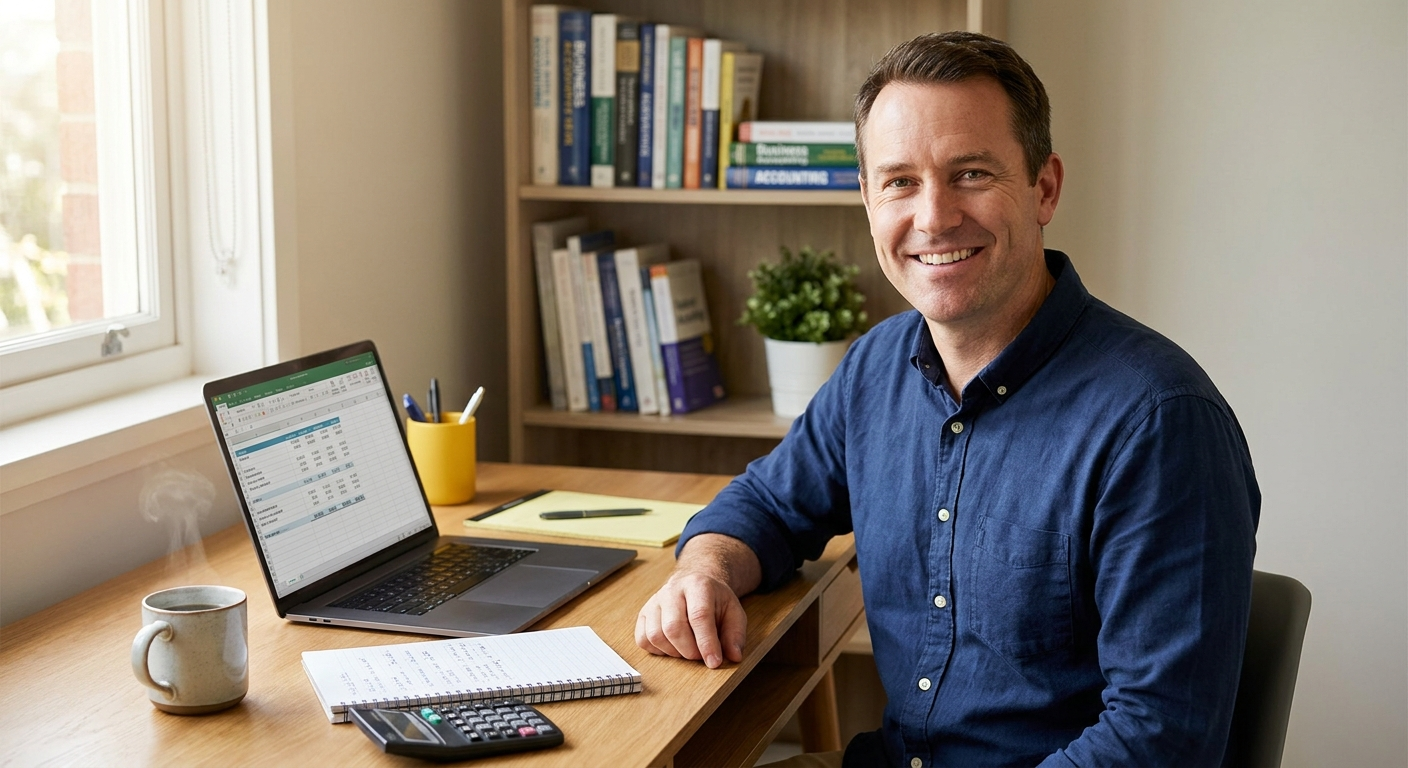
What does a bookkeeper do, exactly? It is one of those questions most small business owners Google quietly, because nobody wants to admit they are not quite sure of the difference between a bookkeeper and an accountant.
What Bookkeeping Actually Means in Plain English
Bookkeeping is the day-to-day recording of your business finances. Every sale, every purchase, every bank transfer gets logged, categorised and kept in order. That is it. No mystery.
Think of it like this: if your accounts were a court case, bookkeeping is the evidence file. Without it, nobody can prove anything. Your accountant needs accurate records to file your tax return correctly, and HMRC may ask to see those records too. HMRC requires self-employed individuals to keep business records for at least five years after the 31 January submission deadline of the relevant tax year, so getting this right from the start saves a lot of headaches later.
Bookkeeping and accounting are not the same thing. Bookkeeping keeps your records organised. Accounting uses those records to file returns, calculate tax and plan ahead. You need both, but they are separate jobs.
What a Bookkeeper Does Day to Day
The practical tasks vary depending on your business, but the core work is consistent. A bookkeeper records income and expenses, reconciles your bank statements, tracks invoices, and makes sure your books match reality. Some also handle payroll and VAT returns, which is where the job starts to overlap a little with accountancy.
One of the most common mistakes small business owners make is mixing personal and business spending in the same bank account. Keeping separate accounts for your business finances makes bookkeeping far simpler and keeps your records clean if HMRC ever comes asking. A bookkeeper will also reconcile your accounts regularly, which means checking that your software or spreadsheet matches your actual bank balance. When those two things do not match, there is usually an error or a missing transaction somewhere.
Bookkeeper vs Accountant: What Is the Difference?
A bookkeeper keeps your records in order. An accountant uses those records to file returns, calculate your tax liability and give you financial advice. In practice, many small business owners use one person for both, which is what I do at Anchor. It means nothing gets lost in translation between whoever is doing the books and whoever is filing your return.
The confusion between the two roles is common, and it matters because it affects what you pay for and what you actually get. A bookkeeper alone will not file your Corporation Tax or advise you on tax planning. An accountant without good books to work from will spend a lot of time untangling your records before they can do anything useful with them. The two jobs work best when they are joined up.
When Do You Actually Need a Bookkeeper?
The honest answer is: probably sooner than you think. Most business owners I speak to have been managing their own books for longer than makes sense. They are capable of doing it, but it is eating time they do not have, and small errors are compounding quietly in the background. Burton upon Trent is a town with serious commercial momentum right now. Staffordshire’s economic ambitions include major regeneration schemes in Burton as part of a broader push for growth across the Midlands, which means more businesses launching, scaling and needing solid financial foundations.
If your records are behind, your bank reconciliation is a mess, or you are dreading your accountant seeing the state of things, that is a clear signal. A bookkeeper does not judge you for the carrier bag of receipts or the spreadsheet that has not been touched since January. Getting it sorted is the point. The earlier you do it, the less it costs to fix.
If any of this sounds familiar, I am happy to have a straight conversation about what you actually need and whether I can help. No pressure, no jargon. Just drop me a message at /contact and we can take it from there.
Ready to get your books sorted?
Whether you want to understand more first or you are ready to talk it through, here are two good next steps.
Not sure if your bookkeeping is in good shape?
Answer five quick questions and find out where the gaps are before they become problems.

AAT qualified accountant based in Uttoxeter. Personal, one-to-one accounting for small businesses and sole traders across the UK.