A Practical Guide to Accounting in Lichfield
“Would 100% recommend, is always polite, professional and helpful! He is always available to answer any questions I have and his knowledge has been a saving grace many times!”
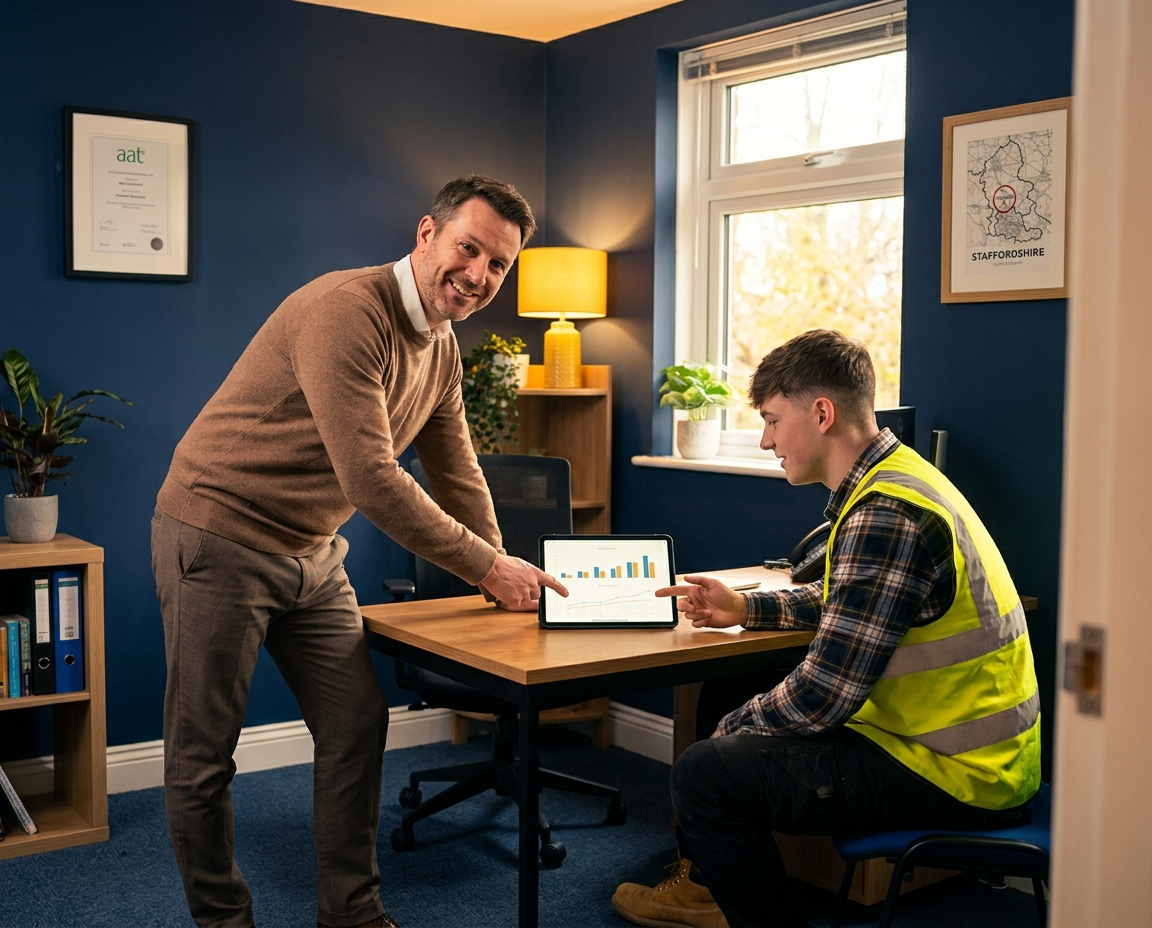
If you run a business in Lichfield and your accounts have become something you dread looking at, you are not alone. This guide covers what you are actually required to do, where most people go wrong, and how to get things back under control.
Why accounting matters more for Lichfield businesses right now
Lichfield has a growing number of self-employed people and small businesses, from tradespeople and retailers to consultants and contractors. According to the Lichfield District Council Authority Monitoring Report 2024-2025, employment floorspace and business activity in the district continues to expand. More economic activity means more people crossing tax thresholds and taking on filing obligations they were not expecting.
At the same time, HMRC is changing how it collects tax. Making Tax Digital for Income Tax will affect self-employed people and landlords earning over £50,000 from April 2026, requiring four quarterly digital submissions per year instead of a single annual return. If you are currently filing one tax return a year and think that is all there is to it, the rules are about to change significantly.
MTD for VAT is already mandatory for all VAT-registered businesses. You must keep digital records and submit returns through compatible software. If your turnover is approaching or above the £90,000 VAT threshold, this applies to you now, not later.
Where most Lichfield business owners go wrong
Most of the problems I see are not caused by dishonesty or incompetence. They come from doing nothing until a deadline forces the issue, or from assuming that the way things have always been done is still acceptable. HMRC’s expectations have shifted, and many small businesses have not caught up.
Leaving everything until January
Self Assessment returns for the tax year ending 5 April are due online by 31 January the following year. That deadline feels distant in April and suddenly urgent in December. Scrambling to gather a year’s worth of records in a few weeks leads to missed expenses, incorrect figures and unnecessary stress. Filing accurately takes time, and that time needs to exist before the deadline, not during it.
Not registering for VAT at the right point
The VAT registration threshold is currently £90,000 in taxable turnover over any rolling 12-month period. Missing this means you become liable for VAT on sales you have already made, paid out of your own margin. Monitoring your turnover monthly, not just at year-end, is the only way to avoid this problem.
“Most people come to me after something has gone wrong or a deadline has crept up. A short conversation earlier in the year almost always costs less than fixing a problem after the fact.”
What to do, step by step
Getting your accounting in order does not require a dramatic overhaul. It requires doing a handful of things consistently, starting with the basics and building from there. The steps below apply whether you are a sole trader, a limited company director, or a contractor working across the Midlands.
- Get your records in one place. Gather your bank statements, invoices and receipts for the current tax year. A simple spreadsheet or a cloud accounting tool like QuickBooks, FreeAgent, Xero or Sage will work. The goal is to know what came in, what went out and what you can legitimately claim as a business expense.
- Understand what you are required to file. Sole traders must submit a Self Assessment tax return. Limited company directors must file annual accounts, a Confirmation Statement and a Corporation Tax return. VAT-registered businesses file quarterly VAT returns. Knowing your obligations means you can work backwards from each deadline rather than reacting to reminders.
- Speak to a qualified accountant before a problem becomes urgent. A short conversation about your current situation, your income, your business structure and any upcoming changes can save a significant amount of money and stress. This does not need to be a long or expensive commitment; a free initial call is enough to identify whether your current approach has gaps.
If your situation involves anything beyond straightforward self-employment income, including CIS deductions, payroll, dividend planning or VAT registration, those areas need specific attention. Each carries its own deadlines, penalties and HMRC requirements.
Costs and what to expect
The honest answer on cost is that it depends on what you need. A sole trader with straightforward income and expenses will pay less than a limited company director who also runs payroll and files quarterly VAT returns. What you should expect from any accountant is a clear, fixed fee agreed in advance, so there are no surprises at year-end. A genuine independent accountant will typically offer better availability and a more personal service than a larger firm, though it is worth asking about continuity arrangements. There are several accountants serving the Lichfield area, so comparing on fee structure and what is included is a sensible starting point.
| Option | Pros | Cons |
|---|---|---|
| DIY accounting | Lower upfront cost, full control of your records | High risk of errors, missed deadlines and unclaimed reliefs |
| Using a qualified accountant | Accurate filing, tax minimised, deadlines tracked for you | Monthly or annual fee depending on scope of work |
How to get started today
You do not need everything in perfect order before speaking to an accountant. In fact, the messier your records, the more useful a short conversation tends to be. A free call gives you a clear picture of what needs doing, in what order, and what it will cost. There is no obligation after that call and no pressure to commit to anything.
- Gather your most recent bank statements and any HMRC letters you have received. Knowing roughly what your turnover is and whether you have any outstanding filing will make the first call more productive.
- Book a free 20-minute call at anchoraccountsandbooks.co.uk/contact. You will speak directly with me, Luke Jackson FMAAT, and leave the call knowing exactly what your next step is.
Ready to sort your Lichfield accounting?
I offer fixed fees, same-day responses and personal handling of your Self Assessment, VAT, payroll and annual accounts, with no tie-in and no junior staff involved. Book a free call and leave knowing exactly what needs doing and what it will cost.
Is your Lichfield business keeping up with its accounting obligations?
Answer five quick questions and get a personalised next step based on your situation.

AAT qualified accountant based in Uttoxeter. Personal, one-to-one accounting for small businesses and sole traders across the UK.