A Plain-English Guide to Self Assessment Accounting in Uttoxeter
“Would 100% recommend, is always polite, professional and helpful! He is always available to answer any questions I have and his knowledge has been a saving grace many times!”
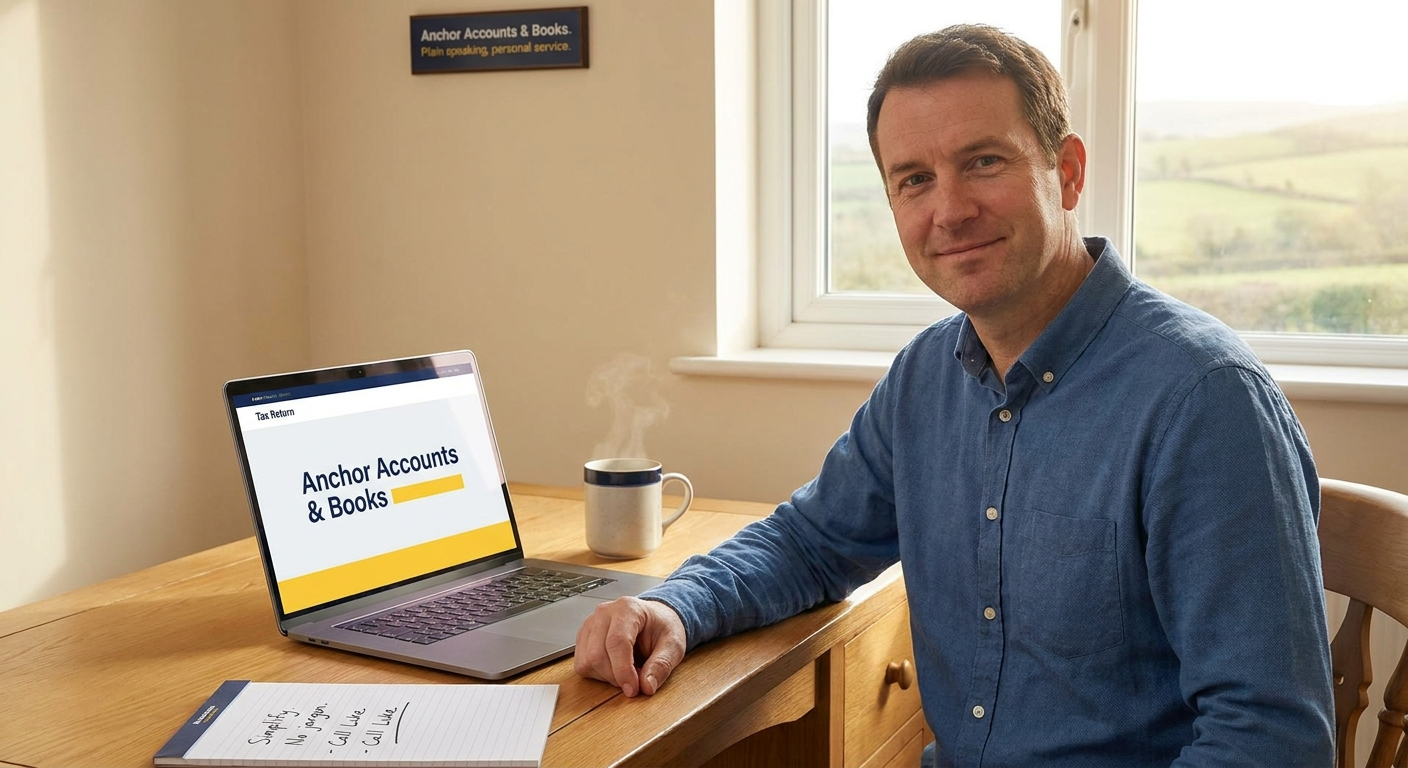
If you are a sole trader, contractor or landlord in Uttoxeter and Self Assessment feels like it is getting harder to manage each year, you are not alone. This guide explains what HMRC expects, where people go wrong, and what your options are for getting it sorted without the stress.
Why Self Assessment accounting matters more than ever in 2026
Self Assessment is not just an annual form. It is a legal obligation with real financial consequences if you get it wrong or miss the deadline. HMRC imposes an automatic £100 penalty for late filing, even if you owe nothing.
Beyond the initial fine, daily penalties of £10 per day apply after three months, rising to a maximum of £900. A further charge of 5% of the tax due or £300 (whichever is greater) is added at six months and again at twelve months. That is a significant bill for a return that was simply not filed on time.
Making Tax Digital for Income Tax is coming. If your qualifying income from self-employment or property is above £50,000, you are mandated to use MTD from 6 April 2026. The threshold drops to £30,000 from April 2027 and £20,000 from April 2028. If you are approaching any of these thresholds, now is the time to get the right software and processes in place.
Where most people go wrong with Self Assessment
Most errors are not deliberate. They come from rushing, misunderstanding what counts as income or an allowable expense, and leaving everything until January. These mistakes cost people money and create unnecessary correspondence with HMRC.
Missing income sources
A common error is only reporting trading income and forgetting other sources. If you received rental income, bank interest, dividends, or income from a side contract, all of it must be declared. HMRC cross-references data from banks and employers, so omissions are increasingly detected.
Claiming expenses that do not qualify
Overclaiming expenses is just as risky as underclaiming. HMRC distinguishes between costs that are wholly and exclusively for business purposes and those that are personal or dual-use. Getting this wrong can trigger an enquiry, and the burden of proof sits with you.
“Most people who come to me have tried to do it themselves for a year or two. They are not struggling because they are disorganised. They are struggling because Self Assessment is genuinely more involved than HMRC makes it look, and the rules keep changing.”
What to do: a straightforward step-by-step
Filing a Self Assessment return involves a defined sequence of steps. Knowing what comes first removes most of the confusion. Here is how I approach it with every client.
- Register with HMRC if you have not already done so. You must register by 5 October following the end of the tax year in which you became self-employed or received untaxed income. HMRC will send you a Unique Taxpayer Reference (UTR) number, which you need to file.
- Gather your records for the full tax year (6 April to 5 April). This includes all income received, all allowable business expenses with receipts or records, bank statements, and any P60 or dividend vouchers if relevant. Do not wait until January to do this step.
- Complete and submit your return online via HMRC’s Government Gateway, or instruct a qualified accountant to do it on your behalf. HMRC’s own guidance confirms that filing online gives you an extra three months compared to paper, lets you save progress, and makes amendments easier.
If an accountant files on your behalf, they need to be authorised as your agent with HMRC before submission. This authorisation process takes a short time, so it is worth doing early rather than in the final week before the deadline.
Costs and what to expect
The cost of getting Self Assessment wrong is often higher than the cost of getting proper help. An accountant’s fee for a straightforward sole trader return is typically a fraction of the penalties HMRC can impose. Fixed-fee arrangements also mean you know the cost upfront, without worrying about hourly billing if questions arise mid-year.
| Option | Pros | Cons |
|---|---|---|
| DIY filing | No accountant fee | High risk of errors, missed allowances, and penalties if filed late or incorrectly |
| Using a qualified accountant | Accurate return, tax minimised, deadline tracked, and someone available to answer HMRC queries | Annual or monthly fee applies |
How to get started today
You do not need to have everything in order before speaking to an accountant. In fact, the earlier you make contact, the more time there is to get your records straight and ensure nothing is missed. A short introductory call is enough to work out what needs doing and what it will cost.
- Locate your UTR number (check a previous HMRC letter or your Government Gateway login) and make a note of your total income for the year, even as a rough figure. This is all you need to have a useful first conversation.
- Book a free introductory call at anchoraccountsandbooks.co.uk/contact. I will ask you a few straightforward questions, give you a fixed price, and explain exactly what happens next. Same-day responses, no obligation.
Ready to sort your Self Assessment return?
I handle Self Assessment returns for sole traders, contractors and landlords across Uttoxeter and the UK on a fixed fee with no hidden charges and no long-term tie-in. Book a free 20-minute introductory call and I will give you a clear price and a clear plan.
Is your Self Assessment return ready to file?
Answer five quick questions and get a personalised next step based on your situation.

AAT qualified accountant based in Uttoxeter. Personal, one-to-one accounting for small businesses and sole traders across the UK.