A Plain, Practical Guide to Bookkeeping in Uttoxeter
“Would 100% recommend, is always polite, professional and helpful! He is always available to answer any questions I have and his knowledge has been a saving grace many times!”
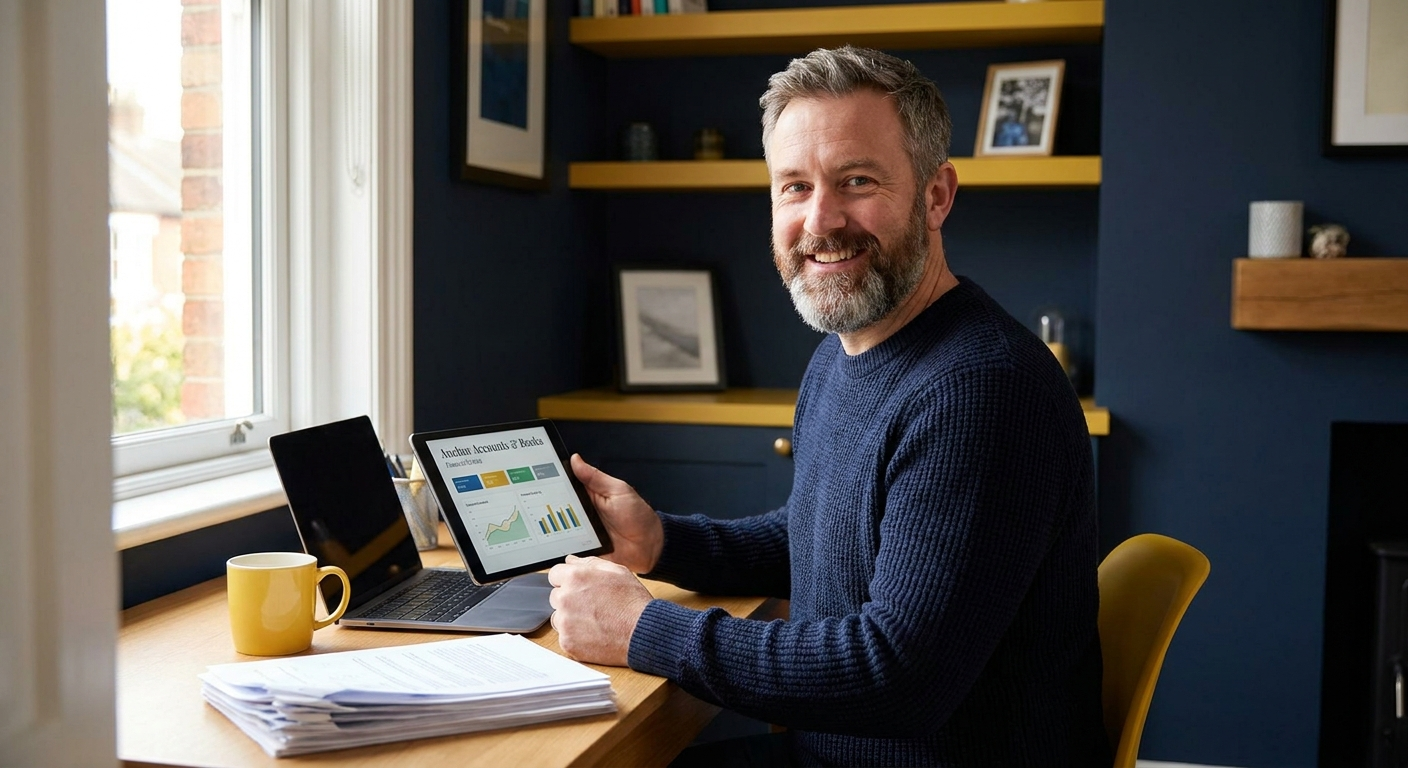
Many small business owners in and around Uttoxeter are running their finances on gut instinct, a spreadsheet that got out of hand, or nothing at all. This guide explains what bookkeeping actually involves, what HMRC expects from you, and what your options are when you are ready to get it sorted.
Why bookkeeping matters for your business
Bookkeeping is the process of recording every financial transaction your business makes: money in, money out, invoices raised, bills paid. Without accurate records, you cannot file your tax return correctly, you cannot claim the expenses you are entitled to, and you cannot see whether your business is actually making money. It is the financial foundation everything else sits on.
For sole traders and small limited companies in Uttoxeter, the stakes are real. The Federation of Small Businesses consistently shows that financial mismanagement is one of the primary reasons small businesses fail in the UK. Getting your records in order is not an admin job to defer; it is a business-critical habit.
From 6 April 2026, sole traders and landlords with annual turnover above £50,000 must keep digital records and submit quarterly updates to HMRC under Making Tax Digital for Income Tax. HMRC’s official guidance confirms that compatible software will be required. If your turnover is approaching that threshold, now is the right time to set up a compliant system.
Where most people go wrong
Most bookkeeping problems I see are not the result of carelessness. They are the result of nobody explaining what actually needs to happen. People do their best with the information they have, and often the gaps only become visible when HMRC gets involved.
Mixing personal and business money
Using a personal bank account for business transactions makes accurate bookkeeping almost impossible. You end up spending hours trying to separate your morning coffee from a client payment. A dedicated business account does not have to be from a high street bank; there are challengers with no monthly fees that work well for small businesses. Opening a business account is not always straightforward, but it is a step worth taking early.
Assuming software does everything for you
Research shows that 71% of UK small businesses use accounting software, but 65% still work with an accountant. Software records what you tell it to. It does not know whether you have categorised something incorrectly, whether you have missed a VAT-eligible purchase, or whether your payroll submissions are complete. It is a tool, not a replacement for judgment.
“Most of the clients who come to me have not done anything badly wrong. They have just been guessing, and they are exhausted by the uncertainty. Getting the books properly sorted tends to feel like relief more than anything else.”
What to do, step by step
Getting your bookkeeping in order does not require a background in finance. It requires a consistent process and the right setup from the start. Here is where to begin.
- Open a dedicated business bank account and connect it to a cloud accounting platform. QuickBooks, FreeAgent, Xero and Sage all allow live bank feeds, which means transactions are pulled through automatically rather than entered manually. I am a QuickBooks ProAdvisor and FreeAgent partner, and I can help you choose the right platform for how your business actually operates.
- Set a regular day each week to review and categorise transactions. This does not need to take more than 20 to 30 minutes if your records are current. Leaving it for months means hours of catch-up work and a much higher chance of errors that affect your tax return.
- Know your filing dates and work backwards. Self Assessment is due by 31 January for the previous tax year. VAT returns are quarterly in most cases. Payroll submissions go to HMRC every month if you run a payroll. Each of these has a penalty attached if it is late, and keeping a simple calendar of obligations prevents most of them.
If this process sounds manageable, that is because it is, once it is set up properly. The difficulty for most sole traders in Uttoxeter is not the day-to-day, it is the initial setup and knowing that what they are doing is actually correct. That is where having someone check your work, or take it off your plate entirely, pays for itself.
Costs and what to expect
The cost of bookkeeping depends entirely on the volume of transactions, whether VAT is involved, and how current your records are. For a sole trader with modest transaction volumes, monthly bookkeeping with a qualified bookkeeper typically starts from around £50 to £100 per month. Limited companies with payroll and VAT will usually pay more. At Anchor Accounts and Books, I offer fixed monthly fees so you know exactly what you are paying before anything starts. There are no surprise invoices and no hourly billing that makes you hesitant to ask questions.
| Option | Pros | Cons |
|---|---|---|
| DIY bookkeeping | Low upfront cost; full visibility of your own numbers | High risk of miscategorisation, missed deadlines and HMRC penalties |
| Cloud software only | Transactions recorded automatically; relatively low monthly cost | Software does not check for errors or advise on tax; compliance still falls on you |
How to get started today
You do not need to have everything in order before you speak to someone. The whole point of an initial conversation is to work out what you actually need and whether it makes sense to work together. I offer a free call at /contact where you can ask questions without any pressure to proceed.
- Gather your last three months of bank statements, whether personal or business, and note down roughly how many transactions you handle each month. That is enough for a sensible conversation about what bookkeeping support would cost and look like.
- Check your next HMRC deadline. If you are VAT registered, your next return date is in your HMRC online account. If you are self-employed, 31 January is the annual Self Assessment deadline. Knowing where you stand helps you act on the right thing first.
Ready to sort your bookkeeping?
I offer monthly bookkeeping, VAT returns and payroll on a fixed fee with no tie-in, so you can try it without committing to anything long-term. Book a free 20-minute call and we will work out what you actually need.
Is your bookkeeping set up correctly for HMRC?
Answer five quick questions and get a clear picture of where your records stand and what to fix first.

AAT qualified accountant based in Uttoxeter. Personal, one-to-one accounting for small businesses and sole traders across the UK.