Making Tax Digital: what it actually means and what you need to do
“Luke is an extremely professional and approachable guy. His knowledge in the field of accounting is second to none.”
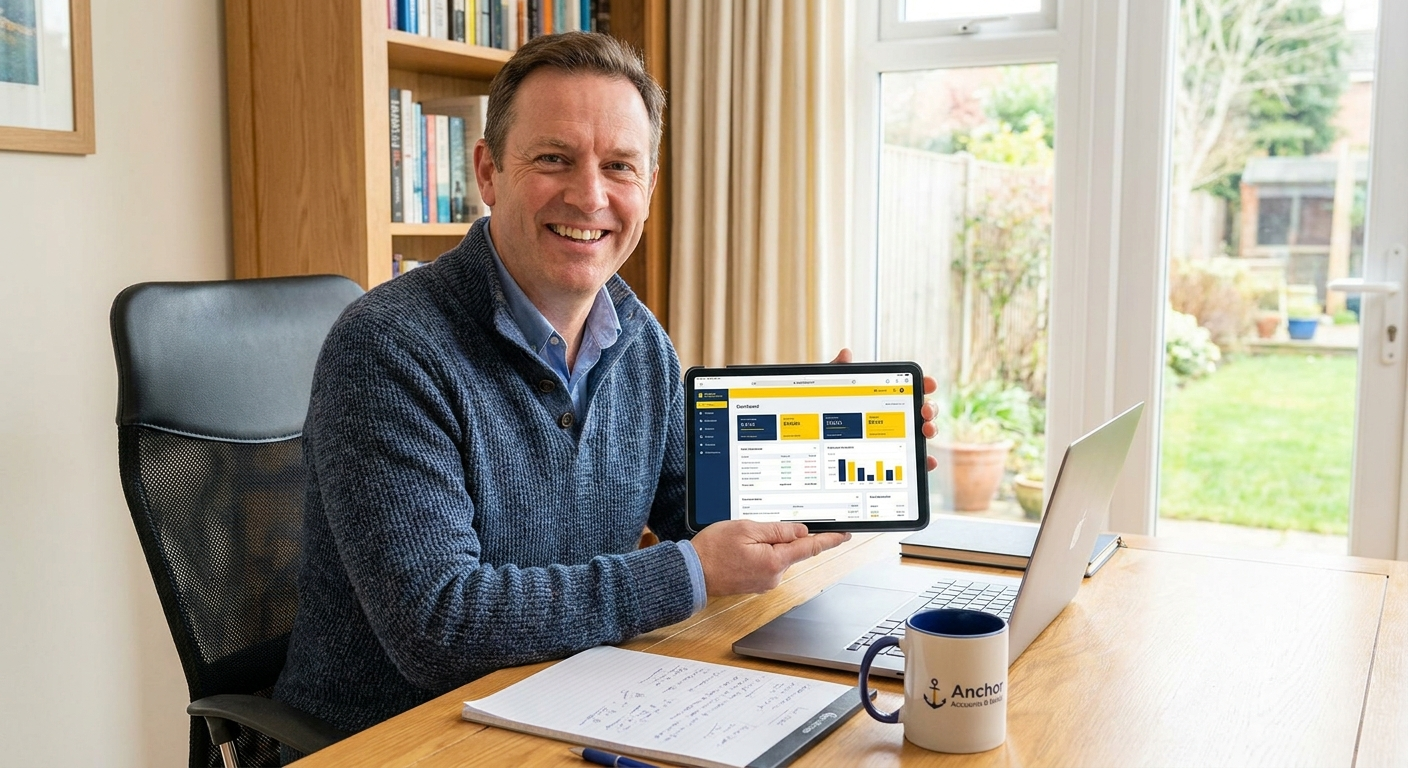
How Making Tax Digital works is one of the most common questions I get from sole traders and small business owners right now, and honestly, it’s not surprising. HMRC has been rolling this out in stages for years, the messaging has been confusing, and half the businesses I speak to aren’t sure whether they’re already compliant or quietly falling behind.
What Making Tax Digital actually is
Making Tax Digital (MTD) is HMRC’s programme to move tax record-keeping and submissions away from paper and manual processes, and onto approved digital software. The idea is that your records are kept digitally throughout the year, and submissions go to HMRC directly from that software rather than through a separate online form. It sounds more dramatic than it is in practice, but there are real obligations attached to it.
There are currently two main strands. MTD for VAT has been in force since April 2022, meaning all VAT-registered businesses should now be signed up and submitting through MTD-compatible software. MTD for Income Tax is newer and affects sole traders and landlords, with the live service having launched from 6 April 2026.
MTD for VAT is not optional. If your business is VAT registered and you’re still submitting returns manually through the old HMRC portal, you’re not compliant. The time to sort this was two years ago, but the fix is straightforward.
Who does Making Tax Digital affect, and when?
For VAT, the answer is simple: every VAT-registered business in the UK, regardless of turnover. If you’re registered for VAT, MTD for VAT applies to you now. HMRC will automatically sign up remaining VAT businesses unless they’re exempt, so there’s no grace period to wait for.
MTD for Income Tax is being introduced in phases. From April 2026, it applies to sole traders and landlords with total qualifying income above a set threshold. HMRC moved MTD for Income Tax into live service from 6 April 2026, with quarterly updates required throughout the tax year. The fourth quarterly update for the current tax year is due by 7 May 2026, so if this applies to you, the clock is already running.
What software do you actually need for Making Tax Digital?
You need software that is recognised by HMRC as MTD-compatible. That means it can keep digital records and send submissions directly to HMRC through their API. The good news is that most of the well-known cloud accounting tools already do this. I use QuickBooks, FreeAgent, Xero and Sage with my clients, and all of them handle MTD submissions.
The choice of software matters less than people think. What matters is that it’s set up correctly, linked to the right HMRC credentials, and that your records are being kept in a way that satisfies the digital record-keeping rules. I’m a QuickBooks ProAdvisor and FreeAgent partner, and proficient in Xero and Sage, so whichever platform suits your business, I can work with it. You don’t need to ditch what you’re already using if it’s MTD-compatible.
What to do next if you’re not sure whether you’re compliant
Start with the basics. Are you VAT-registered? If yes, check whether you’re submitting your returns through MTD-compatible software. If you’re logging into the old HMRC VAT portal and typing figures in manually, you’re almost certainly not compliant. That’s fixable quickly, but it needs sorting.
For Income Tax, check your total qualifying income from self-employment and property. If it’s above the relevant threshold and you’re a sole trader or landlord, MTD for Income Tax now applies to you. Around 9,500 customers had opted into the MTD Income Tax beta by the end of March 2026, so the early adopter phase is behind us. This is live now. If you’re not sure where you stand, a short conversation with an accountant is the quickest way to find out.
MTD isn’t going away, and the honest truth is that most of the anxiety around it disappears once you’ve got the right setup in place. If you’re sitting on the fence or just want someone to check you’re doing it right, I’m happy to have a no-pressure conversation about it. Drop me a message through the contact page and I’ll come back to you the same day.
Want to go deeper on Making Tax Digital?
Whether you want to read through the full details at your own pace or just talk to someone who handles this for clients every day, here are two good next steps.
Not sure whether Making Tax Digital applies to your business?
Answer a few quick questions and find out exactly where you stand with MTD.

AAT qualified accountant based in Uttoxeter. Personal, one-to-one accounting for small businesses and sole traders across the UK.