A Plain-English Guide to Accounting in Stoke-on-Trent
“Would 100% recommend, is always polite, professional and helpful! He is always available to answer any questions I have and his knowledge has been a saving grace many times!”
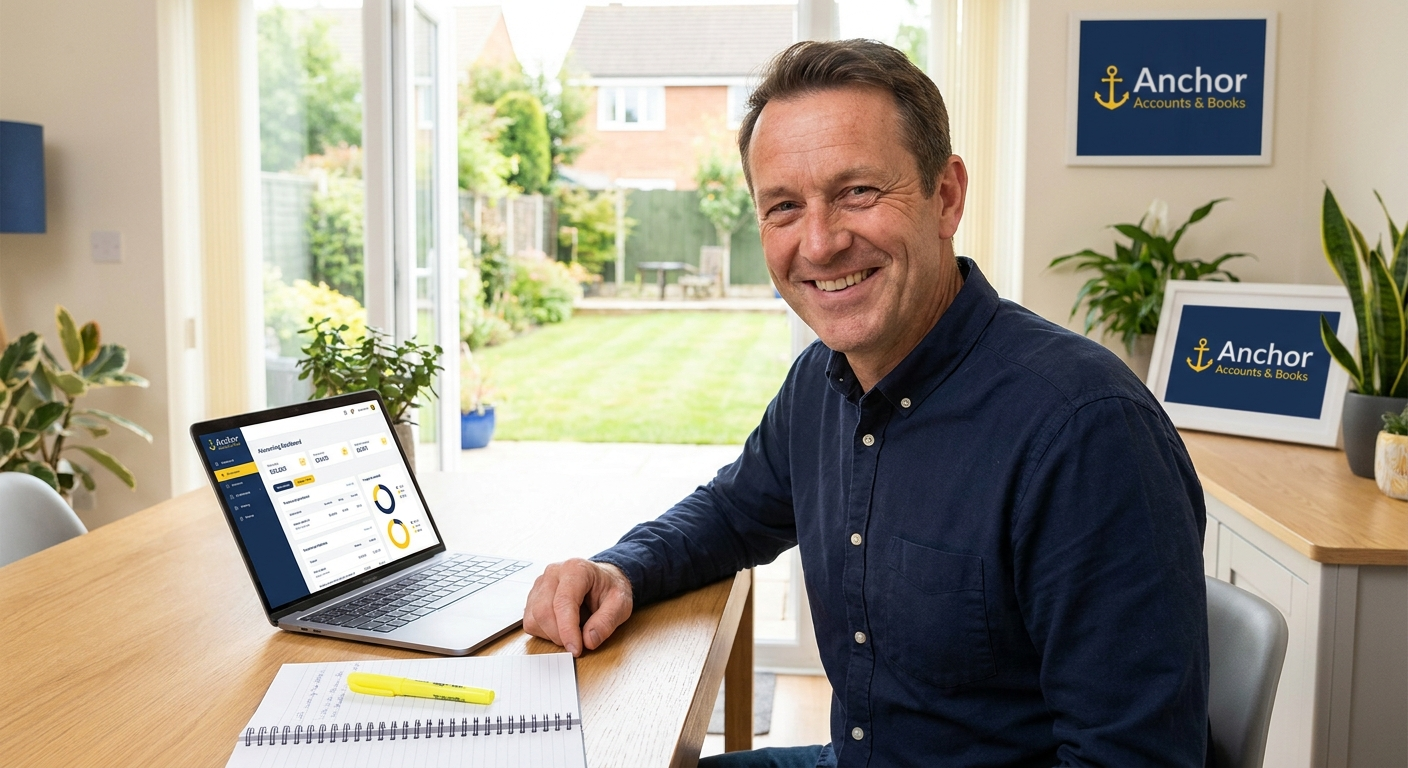
If you run a business in Stoke-on-Trent and your accounts feel like a problem you keep postponing, you are not alone and this is not a permanent situation. This guide covers what records you actually need to keep, which deadlines matter most, and what to do if things have already slipped.
Why getting your accounts right matters more right now
The Staffordshire and Stoke-on-Trent Economic Bulletin for February 2026 reports slow GDP growth and continuing pressure on small businesses across the region. When margins are tight, HMRC penalties and avoidable tax bills hurt more than they should. Getting your records straight is not just a compliance exercise at that point, it is a financial decision.
Stoke-on-Trent has a dense base of sole traders, contractors and small limited companies according to ONS local indicators for the area. Many of those businesses are run by people who know their trade inside out but were never taught how HMRC expects records to be kept. That gap is where most of the avoidable problems begin.
Making Tax Digital for Income Tax is now mandatory for sole traders and landlords earning over £50,000 from 6 April 2026. The threshold drops to £30,000 from 6 April 2027, and to £20,000 from 6 April 2028. If you file a Self Assessment return and have not yet checked whether this applies to you, check the official GOV.UK guidance now.
Where most Stoke-on-Trent business owners go wrong
A December 2024 discussion on UK Business Forums about sole trader expenses shows how many business owners are genuinely uncertain about basic record-keeping, not because they are careless but because nobody ever explained the rules clearly. The mistakes tend to fall into a few predictable categories.
Leaving everything to the last month
Most people who fall behind on their accounts did not ignore the problem deliberately. They were busy, then the records piled up, and the task started to feel too big to start. The January Self Assessment deadline is the most common breaking point, but VAT quarters and payroll submissions can create the same pressure throughout the year. Leaving records to accumulate for six or twelve months makes errors far more likely and means any tax planning opportunity is usually gone by the time figures are pulled together.
Treating compliance and tax planning as separate things
Filing a return on time is the minimum. Making sure you have claimed every allowable expense, structured your income sensibly and planned ahead for your tax bill is the part most people miss when they handle their own accounts or use a firm that only contacts them once a year. A local Facebook post from April 2026 criticising accounting services in the Stoke area makes exactly this point: starting a business is hard enough without an accountant who only shows up at filing time. Year-round visibility over your numbers is what prevents nasty surprises.
“Most of the clients I take on were managing fine until they were not. A letter from HMRC, a year of bigger turnover, or a missed quarter is usually what prompts the call. There is no bad starting point. The question is whether you sort it before HMRC does.”
What to do, in the right order
Whether you are a sole trader, a contractor or a small limited company, the practical steps are similar. The order matters because trying to do tax planning before your records are organised is like trying to navigate without knowing where you currently are.
- Step 1 — Gather your records honestly. Pull together your invoices, bank statements, receipts and any correspondence from HMRC. Do not filter or tidy as you go. A complete but messy picture is far more useful than a partial one. If you use cloud software such as QuickBooks, FreeAgent or Xero, export a transaction report for the relevant period so you can see what is already categorised and what is not.
- Step 2 — Identify your actual deadlines. For sole traders, the Self Assessment deadline is 31 January following the end of the tax year. Limited companies must file their Corporation Tax return within 12 months of the end of their accounting period, with the tax itself due nine months and one day after. VAT returns are due one month and seven days after each quarter end. Write these down with the actual calendar dates so they are visible, not abstract.
- Step 3 — Decide what you can realistically handle yourself and what you cannot. Basic bookkeeping in a simple business is manageable with the right software. But if you have a mix of income types, missed quarters to catch up on, or an HMRC query outstanding, the risk of getting it wrong yourself outweighs the cost of professional help. At that point, contact an accountant before the deadline, not after it.
If Making Tax Digital for Income Tax applies to you now or will apply within the next two years, this is also the moment to set up compliant digital record-keeping. Switching software under deadline pressure is avoidable if you plan ahead.
What accounting actually costs in Stoke-on-Trent
The honest answer is that cost varies depending on the complexity of your business, the state of your records and the services you need. A sole trader with clean records and straightforward income will pay less than a limited company director with payroll, VAT and a pension to manage. What matters is knowing what you are paying for and whether you can speak to the same person every time a question comes up. Hidden hourly rates and surprise invoices for phone calls are more common than they should be, which is why fixed fees are worth looking for specifically.
| Option | Pros | Cons |
|---|---|---|
| DIY accounting | Low upfront cost, direct control over your records | High risk of missed deadlines, under-claimed expenses or HMRC penalties if rules are misunderstood |
| Using a qualified accountant | Accurate filing, year-round advice, tax minimised within the rules, deadlines tracked for you | Monthly or annual fee, though typically recovered through tax savings and time |
How to get started today
If your accounts are already behind, the practical starting point is a brief call with an accountant to assess what is outstanding and what the realistic options are. Most people find this conversation far less painful than they expected. The situation is almost always fixable, and knowing the actual position is less stressful than guessing at it.
- Gather three months of bank statements and any HMRC correspondence you have received in the past twelve months, then book a free call to talk through where things stand.
- Check the GOV.UK Making Tax Digital page to confirm whether MTD for Income Tax applies to you from April 2026 and, if it does, ask your accountant which compliant software suits your business before the deadline arrives.
Ready to sort your accounts?
I offer Self Assessment, VAT, payroll, bookkeeping, tax planning and limited company accounts on a fixed monthly fee with no tie-in and same-day responses. Book a free 20-minute call and we can talk through exactly what you need.
How on top of your business accounts are you right now?
Answer five quick questions and get a personalised next step based on where your records actually stand.

AAT qualified accountant based in Uttoxeter. Personal, one-to-one accounting for small businesses and sole traders across the UK.