Do You Actually Need an Accountant for Your Self Assessment?
“Luke is an extremely professional and approachable guy. His knowledge in the field of accounting is second to none.”
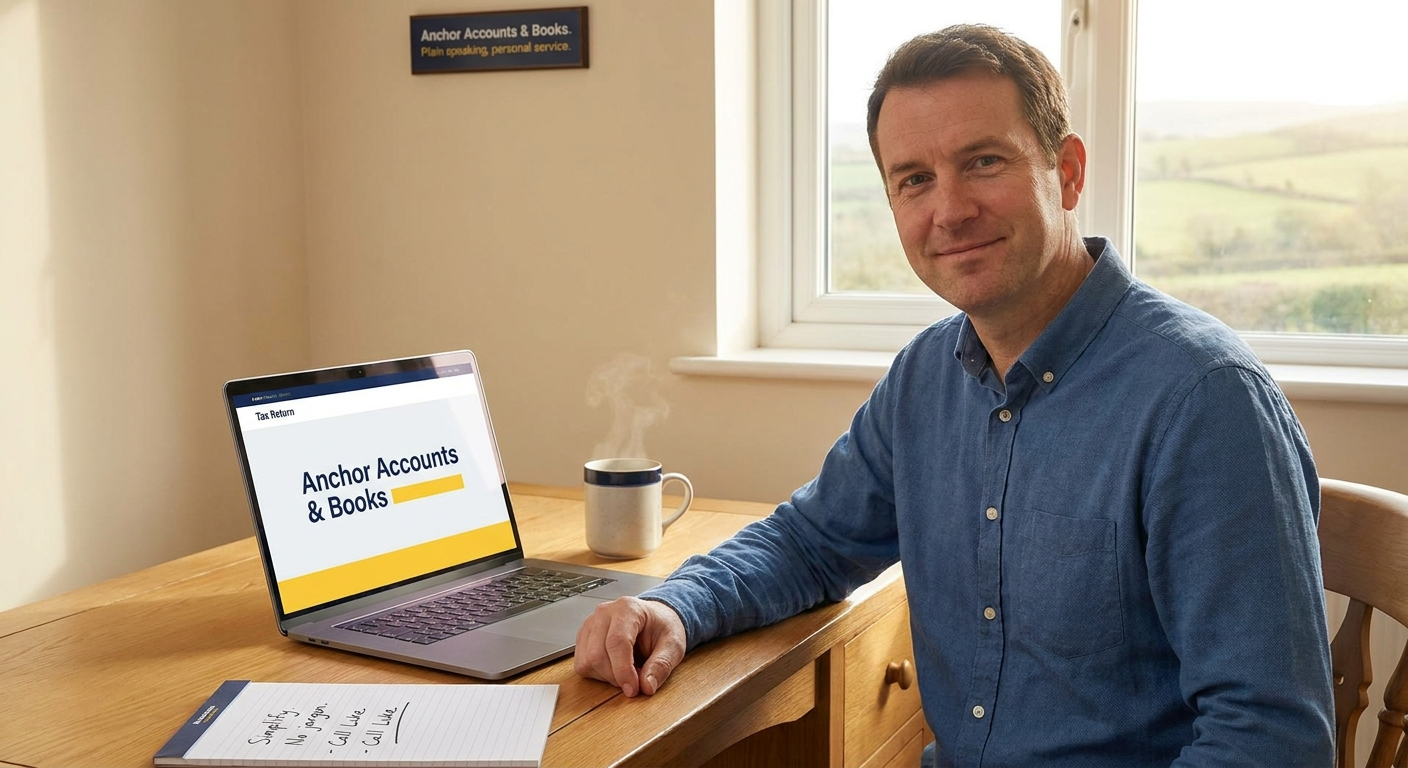
Do I need an accountant for self assessment? It’s one of the most common questions I get asked, and the honest answer is: it depends on your situation — but for most self-employed people and landlords, the cost of getting it wrong far outweighs the cost of getting help.
Who Actually Has to File a Self Assessment Tax Return?
Self assessment is HMRC’s system for collecting income tax from people whose tax isn’t automatically deducted through PAYE. If you’re self-employed as a sole trader, a partner in a business, or you earn income that isn’t taxed at source, you almost certainly need to file one. Landlords, freelancers, contractors, and anyone with untaxed income above £1,000 are all in scope.
The tax year runs from 6 April to 5 April the following year. You then have until 31 January to file your return online and pay any tax you owe. Miss that deadline and HMRC’s late filing penalties kick in immediately — starting at £100 on day one, then £10 a day after three months, up to £900, and further charges at six and twelve months.
You need to register for self assessment with HMRC before you can file. If it’s your first year, you need to register by 5 October following the end of the tax year in which you became self-employed — so don’t leave it until January.
What Does Self Assessment Actually Involve?
At its simplest, a self assessment tax return is a summary of your income and allowable expenses for the year, submitted to HMRC so they can work out how much tax you owe. But simple in theory can get complicated fast. Depending on your situation, you might need to complete supplementary pages alongside the main return — for example, an SA103 for self-employment income or an SA102 if you also had employment income in the year.
HMRC recommends filing online because it gives you longer to submit, lets you save your progress, and makes amendments easier. But the form itself still asks questions that trip people up: capital allowances, overlap profits, payments on account. If you don’t know what those mean, you’re not alone — and entering the wrong figures can cost you more than an accountant would have.
What Can Go Wrong If You Do It Yourself?
The biggest risk isn’t getting the form wrong in an obvious way — it’s the things you don’t know to claim. Most self-employed people I speak to are either over-reporting their income (by forgetting allowable expenses) or under-reporting it (by missing a source of income HMRC already knows about). Both create problems, just different kinds.
There’s also the deadline pressure. Plenty of people start their return in January, realise they’re missing bank statements or invoices from April, and panic. Late filing penalties stack up quickly — and if you owe tax too, there are additional late payment charges on top. It’s a hole that gets deeper the longer you leave it.
When Does It Actually Make Sense to Use an Accountant?
If your finances are straightforward — one source of income, no expenses to speak of, no rental properties — you can probably manage self assessment yourself using HMRC’s online service. But once you add in self-employment, a side income, property rental, CIS deductions, or payments on account, it gets complicated fast. An accountant earns their fee by finding expenses you missed, getting the numbers right first time, and making sure you’re not paying more tax than you legally owe.
There’s also the time factor. Most of my clients in and around Uttoxeter come to me not because they can’t do it — they’re smart, capable people — but because they’d rather spend a Saturday working in their business than wrestling with an HMRC form. And with Making Tax Digital for Income Tax coming in from April 2026 for those earning above £50,000 (dropping to £30,000 in 2027 and £20,000 in 2028), the way self-employed people report income to HMRC is changing significantly. Getting set up properly now saves a lot of scrambling later.
Self assessment doesn’t have to be something you dread every January. Once you’ve got the right system in place — and someone you can actually talk to when you’ve got a question — it becomes much more manageable. If you want to talk through your situation before committing to anything, just drop me a message and I’ll give you a straight answer.
Want to go further with this?
Whether you want to read through everything first or just have a conversation, here are two good next steps depending on where you’re at.
Not sure whether you need to file a self assessment return this year?
Answer five quick questions and find out exactly where you stand before the deadline.

AAT qualified accountant based in Uttoxeter. Personal, one-to-one accounting for small businesses and sole traders across the UK.