What Are Year End Accounts? Here’s What You Actually Need to Know
“Luke is an extremely professional and approachable guy. His knowledge in the field of accounting is second to none.”
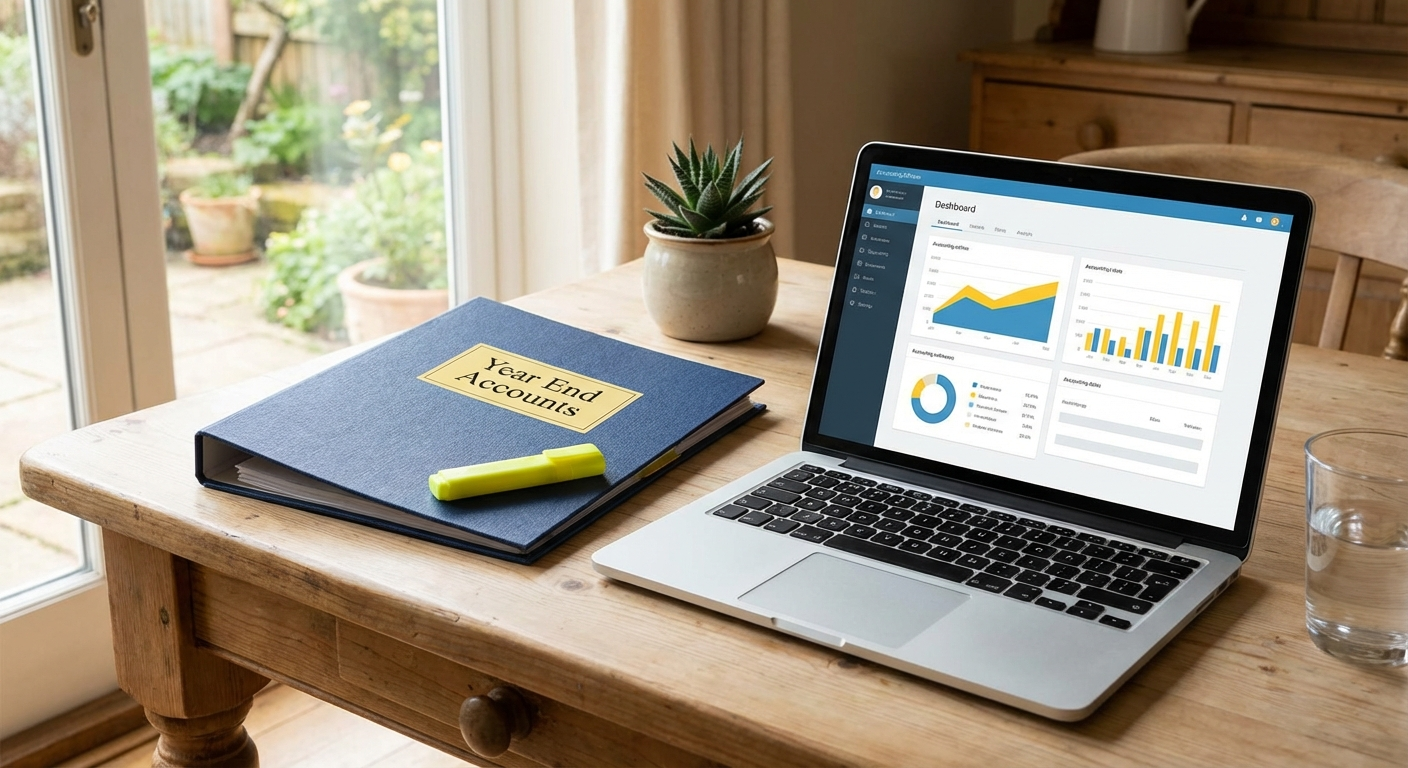
Year end accounts are one of those things most small business owners know they need to deal with, but few are completely sure what they actually contain, why they exist, or what happens if they’re late.
What year end accounts actually are
Year end accounts are a formal financial summary of your business covering a set 12-month period. They show what your business earned, what it spent, what it owns, and what it owes. Think of them as a snapshot of your business health at a specific point in time.
For sole traders, these are sometimes called annual accounts or a profit and loss statement. For limited companies, they’re more detailed, more structured, and filed with both HMRC and Companies House as a legal requirement.
From 1 April 2026, limited companies can no longer use the free HMRC online filing service that many relied on. Commercial software is now required to file your annual accounts and Company Tax Return with HMRC. If you were using the old HMRC service, you’ll need an alternative in place now.
Do you actually need to prepare year end accounts?
If you run a limited company in the UK, yes. It’s a legal obligation. Your accounts go to Companies House and your tax return goes to HMRC. Missing either can mean financial penalties and, eventually, your company being struck off.
If you’re a sole trader, the rules are slightly different. You don’t file accounts with Companies House, but you do need a profit and loss summary to complete your Self Assessment tax return. Most sole traders call this their year end accounts, even if HMRC doesn’t require a formal set in the same way. Either way, you need the numbers.
What’s actually included in year end accounts?
For a limited company, the core documents are a balance sheet (what your business owns and owes), a profit and loss account (income vs. expenditure), and a director’s report. Some companies also need an auditor’s report, though most small businesses qualify for audit exemption if they meet the criteria.
There’s also a notable rule change coming in 2027 that’s worth knowing about now. From 1 April 2027, abridged accounts are being scrapped. Micro-entities will need to file a full balance sheet and a profit and loss statement. Small companies will need to include all of the above plus a director’s report. If you’ve been filing minimal accounts to date, that changes soon.
Deadlines: when do year end accounts need to be filed?
For limited companies, you have 9 months from your accounting year end to file your accounts with Companies House, and 12 months to file your Company Tax Return with HMRC. These are separate deadlines with separate penalties, so it’s worth tracking them both. Your accounting year end is usually the anniversary of when your company was incorporated, though it can be changed.
For sole traders, your year end is usually 5 April (the tax year end), and your Self Assessment return needs to be filed online by 31 January the following year. Miss that date and you’re looking at an automatic £100 penalty, with more added the longer it runs. The question I’d ask is: are your records actually ready to meet that deadline?
Year end accounts don’t have to be the stressful annual event they often become. With the right records and someone in your corner who handles it all personally, it’s a straightforward process. If you want to talk through your situation before anything becomes urgent, just drop me a message at Anchor.
Ready to sort your year end accounts?
Whether you want to go through the detail yourself first or just want someone to take it off your plate, there’s a next step here for you.
Not sure if your year end accounts are on track?
Answer five quick questions to find out where you stand and what to focus on before your deadline.

AAT qualified accountant based in Uttoxeter. Personal, one-to-one accounting for small businesses and sole traders across the UK.