A Practical Guide to Choosing a Self Assessment Accountant
“Would 100% recommend, is always polite, professional and helpful! He is always available to answer any questions I have and his knowledge has been a saving grace many times!”
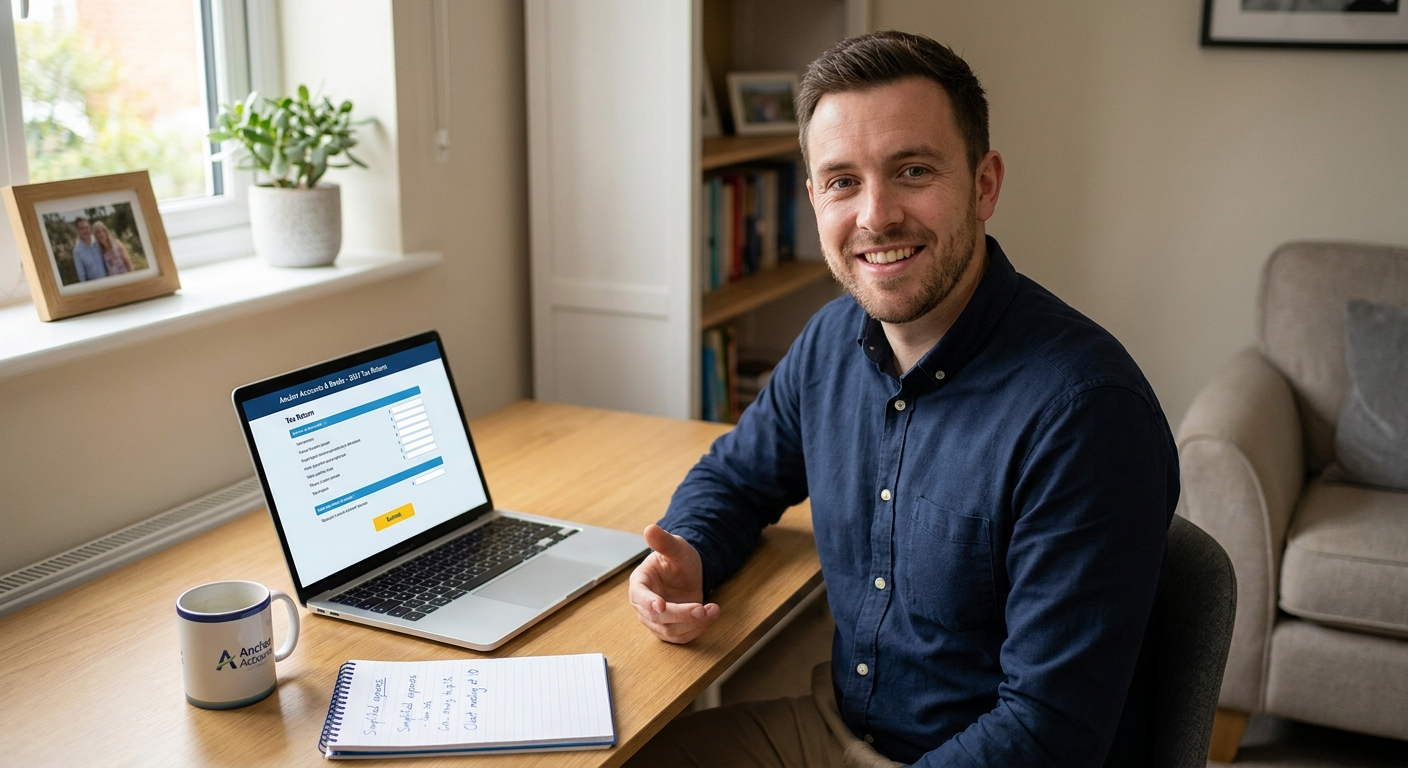
If you are self-employed, freelancing or earning income outside of PAYE, filing a Self Assessment tax return is your legal responsibility and getting it wrong costs you money. This guide explains exactly what a self assessment accountant does, what to look for when choosing one, and how to hand over your return without the admin becoming another thing on your to-do list.
Why Self Assessment matters more than ever in 2026
Self Assessment is how HMRC collects tax from anyone who earns income that is not taxed at source through PAYE. That covers sole traders, freelancers, contractors, landlords and directors. If you fall into any of those categories and your income exceeds the relevant threshold, you are required to file a return each year.
The rules are changing. Making Tax Digital for Income Tax becomes mandatory from 6 April 2026 for sole traders and landlords with qualifying income over £50,000 in the 2024-25 tax year. The threshold drops to £30,000 from April 2027 and to £20,000 from April 2028. This means quarterly digital reporting will replace the annual return for most self-employed people within the next two years.
If your qualifying income from self-employment or property is over £50,000 in the 2024-25 tax year, you are required to use Making Tax Digital for Income Tax from 6 April 2026. HMRC will write to you if you are affected, but checking in advance gives you time to set up the right software and processes. Source: GOV.UK MTD for Income Tax guidance.
Where most people go wrong with Self Assessment
The majority of errors on Self Assessment returns are not the result of fraud or bad faith. They happen because people do not know what they are allowed to claim, they misplace records, or they wait until January and rush. Any of those can result in an incorrect return, an unexpected tax bill or a penalty from HMRC.
Claiming too little because of uncertainty
The most common missed deductions for sole traders include a proportion of home working costs, business mileage, relevant subscriptions and professional fees. Most people under-claim because they are not sure what qualifies. An accountant who knows your trade will spot these gaps before the return is filed.
Filing late or on the wrong basis
Late filing attracts an automatic £100 penalty from HMRC, even if no tax is owed. If the return is more than three months late, daily penalties of £10 begin to accrue. Filing on the wrong basis, for example using cash accounting when accruals accounting is more beneficial, can also result in paying more tax than necessary.
“Most clients I work with had been under-claiming for years before they came to me. Not because they were careless, but because nobody had ever sat down and explained what they were actually allowed to claim.”
How to hand over your Self Assessment (step by step)
Working with a self assessment accountant does not need to be complicated. Most clients at Anchor Accounts and Books spend around 30 minutes gathering their information and then hand everything across. The filing, calculations and communications with HMRC are handled from that point on.
- Gather your income records. That means invoices, bank statements or a summary of what you earned in the tax year (6 April to 5 April). If you use cloud accounting software like QuickBooks, FreeAgent or Xero, a report can be pulled in minutes.
- Collect your expense records. Receipts, mileage logs, bank statements showing business purchases. If some records are missing or incomplete, note what you have and flag it. A good accountant will work with what is available and advise on what else might be claimable.
- Share your information securely and confirm the figures. Your accountant prepares a draft return, explains your tax liability in plain English and asks you to approve before anything is submitted to HMRC. Once you confirm, the return is filed and you receive a confirmation reference.
Agents registered with HMRC are authorised to file on your behalf using the Self Assessment for Agents online service. This means you do not need to log into your own Government Gateway account to submit. Once the authorisation is in place, your accountant handles all submissions directly.
What a Self Assessment accountant costs and what affects the price
Fees vary depending on the complexity of your income, whether you have multiple income sources, whether you use bookkeeping software and how organised your records are. Forum discussions show some accountants charging upwards of £1,500 for accounts and self-assessment combined, which reflects the wide range in the market. At Anchor Accounts and Books, fees are fixed and agreed before work begins, so there are no hourly surprises.
| Option | Pros | Cons |
|---|---|---|
| Filing it yourself | No accountancy fee | High risk of missing allowable deductions, time-consuming, and no buffer if HMRC queries your return |
| Using a self assessment accountant | Accurate filing, deductions reviewed, deadlines tracked, MTD compliance handled | Annual or fixed monthly fee |
How to get your Self Assessment sorted today
If your return is due or you are approaching a deadline, the worst thing to do is wait. HMRC penalties start the moment you miss the 31 January filing date, regardless of whether tax is owed. If you have qualifying income over £50,000 and have not yet looked at Making Tax Digital obligations, that is also worth addressing now rather than in April.
- Pull together your income summary for the last tax year (6 April to 5 April). Bank statements, invoices, or a software report from QuickBooks, FreeAgent or Xero will cover most of what is needed.
- Book a free introductory call at anchoraccountsandbooks.co.uk/contact to go through your situation. Luke will confirm what is needed, give you a fixed fee quote and take it from there.
Ready to sort your Self Assessment?
I prepare and file Self Assessment tax returns personally on a fixed fee with no tie-in, covering income review, allowable deductions and direct HMRC submission. Book a free 20-minute call and I will tell you exactly what is involved and what it costs.
Is your Self Assessment ready to file?
Answer five quick questions and get a clear picture of where you stand and what to do next.

AAT qualified accountant based in Uttoxeter. Personal, one-to-one accounting for small businesses and sole traders across the UK.