A Plain-English Guide to Filing Your Corporation Tax Return
“Would 100% recommend, is always polite, professional and helpful! He is always available to answer any questions I have and his knowledge has been a saving grace many times!”
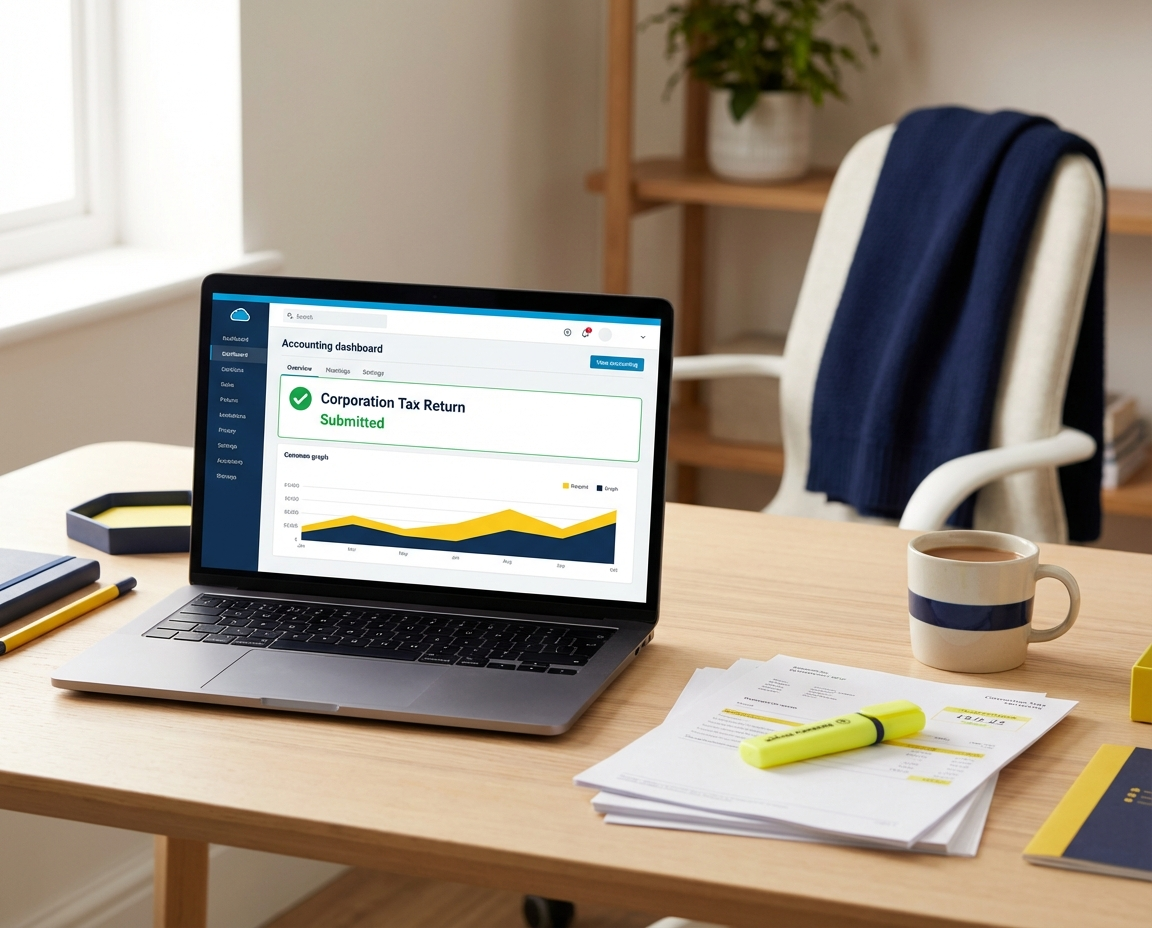
Every limited company in the UK must file a corporation tax return with HMRC, even if no tax is owed. This guide explains exactly what the CT600 is, when it is due, what goes wrong and how to get it filed correctly.
Why corporation tax matters for your limited company
If your company is incorporated in the UK, HMRC requires you to file a CT600 Company Tax Return for every accounting period. This applies whether you made a profit, a loss, or nothing at all. Filing late carries financial penalties, and those penalties are rising. From 1 April 2026, HMRC is increasing fixed late filing penalties for corporation tax to counteract the effect of inflation since the charges were first introduced.
The corporation tax landscape has also become more complicated for growing businesses. Profits between £50,000 and £250,000 are subject to a marginal effective rate of 26.5%, not the headline 25% or the small profits rate of 19%. Many directors do not realise this until they see an unexpected bill. Getting the return right from the start is not optional.
HMRC is currently consulting on standardising the format and data tagging of corporation tax computations, with the consultation running to 2 June 2026. Mandatory online filing for amended returns is also being proposed. If you are filing for accounting periods approaching the 2026 changes, it is worth being aware that requirements may tighten.
Where most directors go wrong with the CT600
The CT600 is not a form you can rush. The official HMRC guidance on completing the CT600 was last updated in April 2026 and covers income, deductions, reliefs and tax reconciliation. Errors in any of these areas can trigger adjustments, penalties or a compliance check. The most common CT600 filing mistakes are well-documented and almost all of them are avoidable.
Missing or miscalculating capital allowances
Capital allowances let you deduct the cost of equipment, vehicles and other qualifying assets from your taxable profits. A significant number of directors forget to claim them at all, which means paying more tax than is legally required. If you bought a laptop, a van or any tools for the business during the year, those costs need to be treated correctly in your CT600.
Incorrect treatment of directors’ salaries and dividends
The split between salary and dividends affects both corporation tax and your personal tax position. Getting this wrong on the CT600 creates a knock-on problem for your self assessment return. Including client entertainment as a deductible expense is another frequent error. HMRC does not allow it, and including it will lead to adjustments and potentially further scrutiny.
“Most of the directors I work with thought their corporation tax return was something they could sort themselves at the end of the year. The ones who tried usually found it took far longer than expected, cost more in missed allowances than they saved in fees, and left them unsure whether they had got it right.”
How to file a corporation tax return, step by step
There are two separate deadlines you need to track. Corporation tax is due for payment nine months and one day after the end of your accounting period. The CT600 itself must be filed with HMRC within twelve months of the end of the accounting period. These are different dates. Missing either one has consequences.
- Confirm your accounting period end date and work out both deadlines: payment is due nine months and one day after the period ends, and the CT600 filing deadline is twelve months after the period ends. Write both dates down now.
- Gather your full-year figures: bank statements, sales invoices, purchase receipts, payroll records, details of any assets bought or sold, and director loan account movements. Your bookkeeping software (QuickBooks, FreeAgent, Xero or Sage) should hold most of this if it has been kept up to date.
- Prepare your statutory accounts alongside the CT600. HMRC requires both to be filed together in iXBRL format. This is where most directors find DIY filing breaks down. The accounts must be tagged correctly, and the tax computation must reconcile to the profit figure in your accounts.
If your company is dormant, you still need to notify HMRC and may still need to file a return depending on your circumstances. Do not assume dormant means no obligations. A quick call to a qualified accountant will confirm what is actually required for your specific situation.
Costs and what to realistically expect
The cost of filing your corporation tax return yourself is not just the time it takes. Late filing penalties start at £100 from day one past the deadline, a further £100 at three months, then 10% of any unpaid tax at six months and another 10% at twelve months. Those fixed penalties are increasing from April 2026. Weighed against the cost of an accountant handling the return accurately and on time, the numbers often tell a clear story.
| Option | What you get | What to watch out for |
|---|---|---|
| DIY filing | No accountancy fee for the return itself | iXBRL tagging errors, missed reliefs, late filing penalties and no one checking your figures |
| Using a qualified accountant | Accurate CT600, correct reliefs claimed, deadlines tracked and filed on time | An annual or monthly fee, though a fixed fee removes surprises |
How to get your corporation tax return sorted today
The earlier you start, the more options you have. If your accounting period has already ended, your payment deadline may already be approaching. If you are within three months of your filing deadline and have not started, act this week. Waiting until the last month creates unnecessary pressure and increases the chance of errors.
- Log into your HMRC online account and confirm your current accounting period and both deadlines. If you do not have access to HMRC Online Services, register now as this takes time to set up.
- If you are considering working with an accountant, book a free call now to discuss your accounting period, current records and what information is needed. The earlier an accountant is brought in, the more straightforwardly the return can be prepared.
Ready to sort your corporation tax return?
I prepare your CT600 and statutory accounts personally, claim every relief you are entitled to and file with HMRC on time, all for a fixed fee with no tie-in. Book a free 20-minute call and I will tell you exactly what is needed for your company.
Is your corporation tax return on track this year?
Answer five quick questions and get a clear picture of where you stand before your CT600 deadline arrives.

AAT qualified accountant based in Uttoxeter. Personal, one-to-one accounting for small businesses and sole traders across the UK.