A Plain English Guide to Year End Accounts
“Would 100% recommend, is always polite, professional and helpful! He is always available to answer any questions I have and his knowledge has been a saving grace many times!”
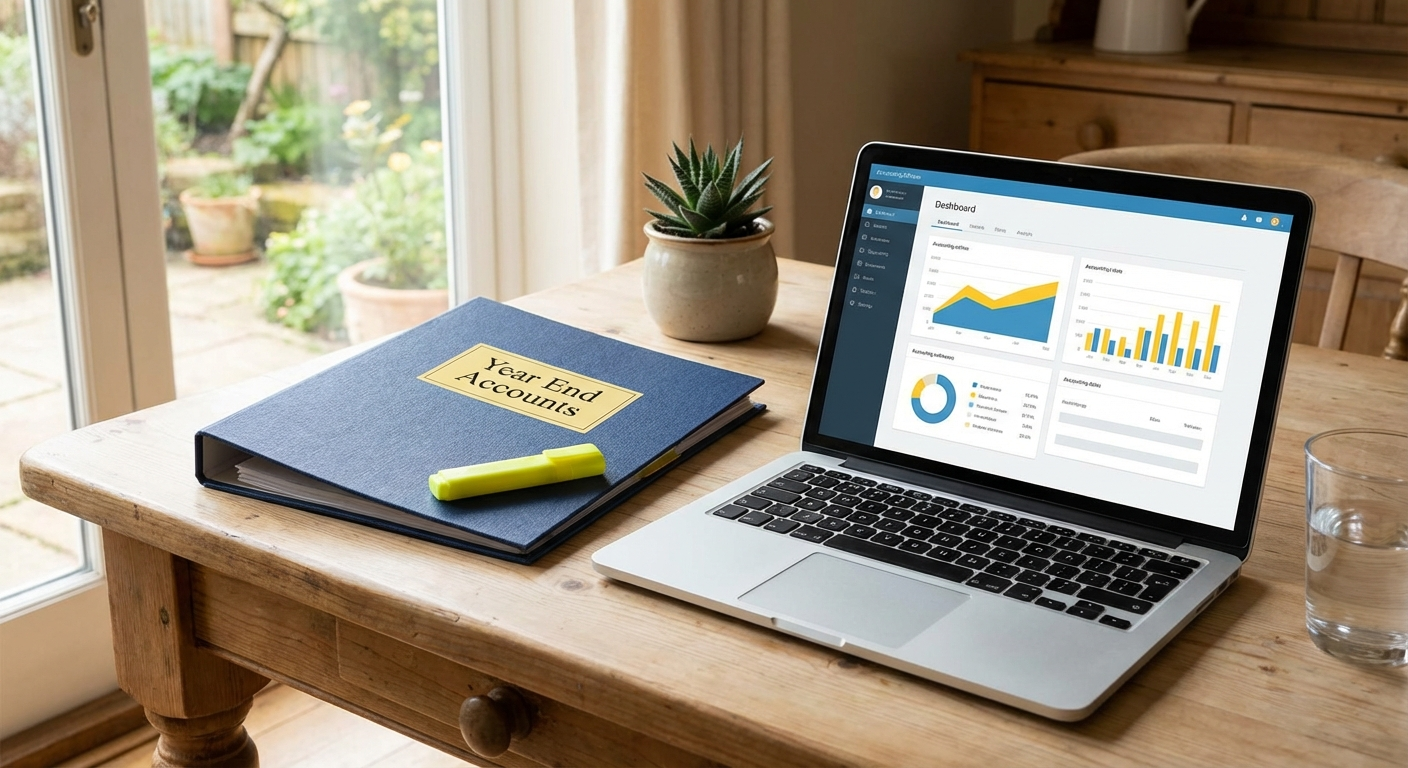
Every UK business has to produce year end accounts, but most small business owners are not entirely sure what that means, what deadlines apply, or what happens if something is wrong. This guide covers exactly what is required, how to prepare, and what to do if your records are not in great shape.
Why year end accounts matter for your business
Year end accounts are a legal requirement, not optional paperwork. If you run a limited company, you must file accounts with Companies House and a Company Tax Return with HMRC every year, regardless of whether you made a profit. Sole traders declare their income and expenses through a Self Assessment tax return instead, but the obligation is the same.
There have been meaningful rule changes in 2026 worth knowing about. From 1 April 2026, HMRC closed its free online filing service for company accounts and tax returns. Limited companies must now use commercial accounting software to file. If your accountant was using the old HMRC portal, that is no longer an option. Separately, Companies House is overhauling filing rules for small businesses from April 2027, requiring micro-entities to submit both a balance sheet and a profit and loss statement rather than the reduced abridged format many relied on before.
From 1 April 2027, abridged accounts are scrapped for small and micro-entity businesses. Micro-entities must file a full balance sheet and a profit and loss account with Companies House. If you have been using abridged accounts up to now, speak to an accountant before your next filing so you understand what changes.
Where most people go wrong with year end accounts
The most common problems I see are not dramatic fraud or deliberate avoidance. They are straightforward oversights: mixing personal and business expenses, missing deadlines because the date crept up, or assuming the accounts will sort themselves out once a rough set of figures is pulled together. These mistakes cost money and create stress that is entirely avoidable.
Leaving everything until the last minute
The deadline for filing a limited company’s accounts with Companies House is nine months after the company’s financial year end. The deadline for filing a Company Tax Return with HMRC is twelve months after the end of the accounting period, with any Corporation Tax owed due nine months and one day after year end. Leaving the paperwork until the final weeks means mistakes go unchecked and legitimate tax reliefs get missed. A late filing penalty starts from day one after the deadline.
Poor record-keeping throughout the year
Stock valuation is a well-documented pain point for business owners preparing year end accounts, but the broader issue is records that have not been kept in real time. Missing receipts, unreconciled bank statements, and undocumented cash transactions all create gaps. These gaps mean either inaccurate accounts or a time-consuming scramble to reconstruct transactions months after the fact.
“Most of the clients I work with are not disorganised people. They are busy people who have been focusing on running a business rather than keeping on top of paperwork. That is completely normal. The accounts can still be done properly, and often the tax position is better than they expected once everything is correctly recorded.”
What to do when preparing year end accounts
Preparing year end accounts is a process with a clear order. Working through each step reduces the chance of errors and means nothing gets filed in a rush.
- Step 1: Gather all financial records for the accounting period. This includes bank statements for every business account, sales invoices, purchase receipts, payroll records, any VAT returns you have submitted, and details of any assets purchased or disposed of during the year.
- Step 2: Reconcile your records. Check that every transaction in your bank statement is accounted for in your bookkeeping. If you use cloud accounting software such as QuickBooks, FreeAgent, Xero or Sage, this process is considerably faster. If your records are on spreadsheets or paper, allow more time. Any unexplained differences need to be resolved before the accounts can be finalised.
- Step 3: Review for missing claims and reliefs. Once the figures are reconciled, check whether all allowable business expenses have been included, whether any capital allowances apply for equipment purchased, and whether your tax position has been considered properly before anything is filed. Filing accurately is one thing. Filing in a way that makes sure you are not paying more tax than you owe is something different.
For limited company directors, the accounts then need to be prepared in the correct statutory format and filed with both Companies House and HMRC within their respective deadlines. From April 2026, HMRC filing must be done through commercial software, not the old HMRC online service. Sole traders report through Self Assessment, with the filing deadline of 31 January following the end of the tax year.
What year end accounts cost and what to expect
The cost of year end accounts depends on the structure of the business, how organised the records are, and who does the work. A sole trader with straightforward income and expenses will pay less than a limited company with payroll, VAT, and multiple income streams. Doing it yourself carries a real risk of errors or missed deadlines, and HMRC penalties start from the day after a deadline passes. Using a qualified accountant gives you accurate, filed accounts with someone who checks the figures before submission.
| Option | Pros | Cons |
|---|---|---|
| DIY filing | No accountancy fee | Higher risk of errors, missed reliefs, and late penalties |
| Using a qualified accountant | Accurate accounts, tax reviewed, deadlines tracked | Annual or monthly fee applies |
How to get your year end accounts sorted
If your year end is approaching or already past, the right move is to act now rather than wait. Late accounts attract penalties regardless of whether any tax is owed, and the longer the delay, the harder it becomes to reconstruct missing records. The process is straightforward once someone who knows what they are doing takes it on.
- Work out your accounting year end date and check how much time you have before the Companies House or HMRC filing deadline applies to you.
- Gather your bank statements, invoices, and expense records into one place. If you use cloud software, check that your accounts are reconciled up to your year end date before passing anything to an accountant.
Ready to sort your year end accounts?
I prepare and file year end accounts and tax returns for sole traders and limited companies at a fixed fee, with no tie-in contract and same-day responses throughout. Book a free call and I will tell you exactly what is needed and what it will cost.
How ready are your records for year end?
Answer five quick questions and get a specific next step based on where your accounts stand right now.

AAT qualified accountant based in Uttoxeter. Personal, one-to-one accounting for small businesses and sole traders across the UK.