Do you actually need a bookkeeper, or can you keep doing it yourself?
“Luke is an extremely professional and approachable guy. His knowledge in the field of accounting is second to none.”
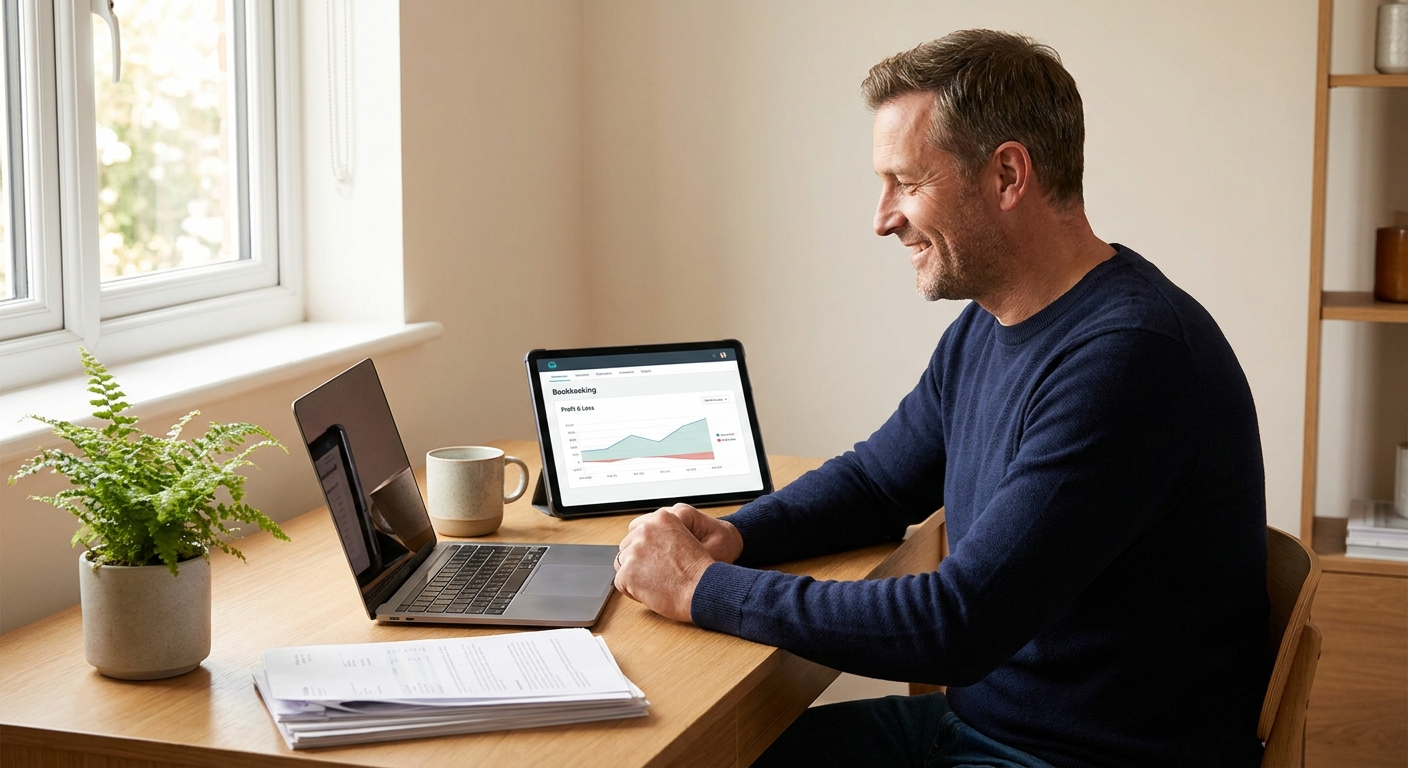
Do I need a bookkeeper? It’s one of the most common questions I hear from small business owners across Staffordshire, and the honest answer is: it depends on where your business is right now.
What is bookkeeping, and what does it actually cover?
Bookkeeping is the process of recording every financial transaction in your business. Every sale, every purchase, every payment in and out. It’s the foundation that everything else sits on, including your tax returns, your VAT submissions, and any decisions you make based on your numbers.
A lot of people confuse bookkeeping with accounting. Bookkeeping is the day-to-day recording. Accounting is what happens with those records once they’re in order, things like preparing your annual accounts, calculating your tax liability, and giving you advice on your finances. You need clean books before any of that can happen properly.
From April 2026, sole traders and landlords with qualifying income over £50,000 are required to keep digital records and submit quarterly updates to HMRC under Making Tax Digital for Income Tax. If that applies to you, your bookkeeping process needs to change before the deadline.
When does it make sense to stop doing it yourself?
Most people start by doing their own books. A spreadsheet, maybe a folder of receipts, possibly a basic app. That works fine when you’re just starting out and the volume is low. The problem is that businesses grow, and what took an hour a month can quietly become a full Sunday afternoon every quarter.
There are a few clear signals that it’s time to get help. You’re consistently behind on your records. You’re not confident your VAT figures are right. You’re dreading the question your accountant asks every year: “Can you send me your records?” HMRC’s penalty system doesn’t make allowances for busy schedules, and with reforms to penalty structures taking effect in 2026, missed submissions are increasingly likely to trigger automatic charges.
What a good bookkeeper actually takes off your plate
When I take on bookkeeping for a client, I’m not just ticking a compliance box. I’m categorising transactions, reconciling bank accounts, flagging anything that looks off, and making sure the figures are ready whenever they’re needed. That might be monthly, quarterly, or at year-end depending on what suits the business.
For VAT-registered businesses, it also means making sure every return is accurate and submitted on time. With Making Tax Digital requirements expanding over the next two years, having your records in a compliant digital format is going to matter more, not less. I use QuickBooks, FreeAgent, Xero, and Sage, so whichever platform you’re already on, we can make it work.
Is it worth the cost? Here’s an honest answer.
There were 5.6 million small businesses in the UK at the start of 2025, and the vast majority are owner-managed. Most of those owners are good at what they do but didn’t set up in business to spend their evenings categorising bank transactions. Time has a real cost, even if it doesn’t show up on an invoice.
Fixed-fee bookkeeping means you know exactly what you’re paying each month, and you get back the hours you’d have spent doing it yourself. For most clients, the conversation shifts from “I need to sort the books” to “my books are already sorted.” That’s a different kind of headspace, and it’s genuinely useful for running a business.
If you’re on the fence about whether this is worth it for your business, just drop me a message and we can talk it through with no pressure. I’d rather you go away with a clear answer than a sales pitch.
Want to go further with this?
Whether you want a practical guide to setting up bookkeeping yourself or you’d rather just talk through handing it over, both options are here.
Not sure if your bookkeeping setup is working for you?
Answer five quick questions and find out whether your current approach is keeping up with your business.

AAT qualified accountant based in Uttoxeter. Personal, one-to-one accounting for small businesses and sole traders across the UK.