Sole Trader Accounts: What They Are and What You Actually Need
“Luke is an extremely professional and approachable guy. His knowledge in the field of accounting is second to none.”
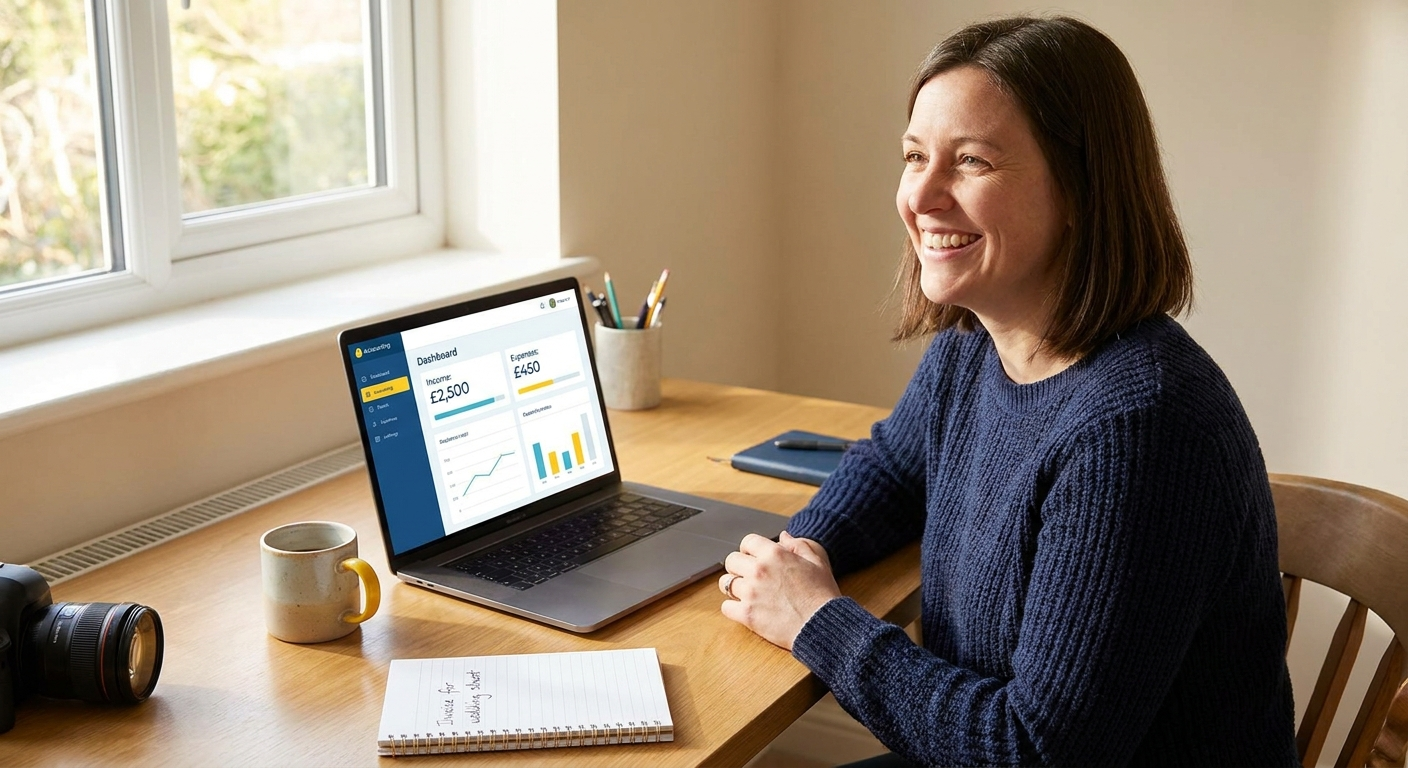
What are sole trader accounts, exactly? It is one of those questions a lot of people feel they should already know the answer to, but the honest truth is that most sole traders start trading long before anyone explains what they are actually supposed to be doing with their numbers.
What sole trader accounts actually are
Sole trader accounts are the financial records that track your business income and expenses, and the documents you use to report your profits to HMRC. As a sole trader, your business is not a separate legal entity from you personally. That means your profit is your income, and you pay Income Tax and National Insurance on it directly through the Self Assessment system.
There is no Companies House filing, no corporation tax return, and no annual accounts in the same format a limited company would produce. What you do need is a clear record of what came in, what went out, and a Self Assessment tax return filed every year to report it. HMRC’s Self Assessment guidance sets out what you are required to report, but it does not always tell you how to get organised in the first place.
If your Self Assessment tax bill is over £1,000 and less than 80% of your tax is collected at source, HMRC will ask you to make payments on account towards the following year’s bill. A lot of sole traders are caught off guard by this in their first year.
What HMRC actually requires you to do
As a sole trader, you have three core obligations. You need to register for Self Assessment, keep records of your income and expenses, and file a tax return each year. The online filing deadline is 31 January following the end of the tax year. If you still file on paper, that deadline is earlier at 31 October. Miss the deadline and an automatic £100 penalty lands, even if you owe nothing at all.
If your turnover goes above the VAT registration threshold (currently £90,000), you will also need to register for VAT and file VAT returns. That brings its own record-keeping requirements and, from April 2026, sole traders with turnover above £50,000 will need to comply with Making Tax Digital for Income Tax, which means keeping digital records and submitting quarterly updates to HMRC. MTD-compatible software will be required to do that.
What you can do yourself and what is worth handing over
A lot of sole traders manage their own accounts in the early days, and that is completely fine. A simple spreadsheet tracking your income and allowable expenses is a valid starting point. Cloud accounting tools like QuickBooks, FreeAgent or Xero make this easier, with built-in categories and bank feeds that pull your transactions in automatically. HMRC publishes guidance on allowable expenses so you know what you can and cannot claim.
Where things get harder is when your income grows, your expenses get more varied, or you start wondering if you are paying more tax than you need to. Missed expense claims are money you have already lost. A good accountant does not just file your return, they check that you have claimed everything you are entitled to and flag things before they become a problem. Recent data puts the number of self-employed workers in the UK at around 4.38 million, and a large proportion of them are overpaying tax simply because no one has ever reviewed their setup.
What to do if you are already behind with your accounts
If you have got a backlog of receipts, a tax return overdue, or you are not entirely sure when you last looked at your numbers properly, you are not in a unique situation. Most of the sole traders I speak to for the first time are somewhere on that spectrum. The important thing is that it is fixable, and the earlier you sort it the less painful it tends to be.
HMRC’s late payment interest rate is currently 7.75%, so letting unpaid tax sit is genuinely costly over time. Getting your records up to date, filing anything outstanding and understanding what you owe going forward will put you back in control quickly. GOV.UK’s business population data shows that sole proprietorships make up 56% of UK private sector businesses, which means the system is genuinely built around people in your position.
If any of this has made things clearer, that is a good sign you are already thinking about it the right way. And if you want to talk through your specific situation without any pressure, just drop me a message and we can go from there.
Ready to go further?
Whether you want to read the practical how-to guide or have a conversation about your own accounts, both options are below.
Not sure where you stand with your sole trader accounts?
Answer five quick questions and find out what you should be focusing on right now.

AAT qualified accountant based in Uttoxeter. Personal, one-to-one accounting for small businesses and sole traders across the UK.