What is small business accounting, and do you need it?
“Luke is an extremely professional and approachable guy. His knowledge in the field of accounting is second to none.”
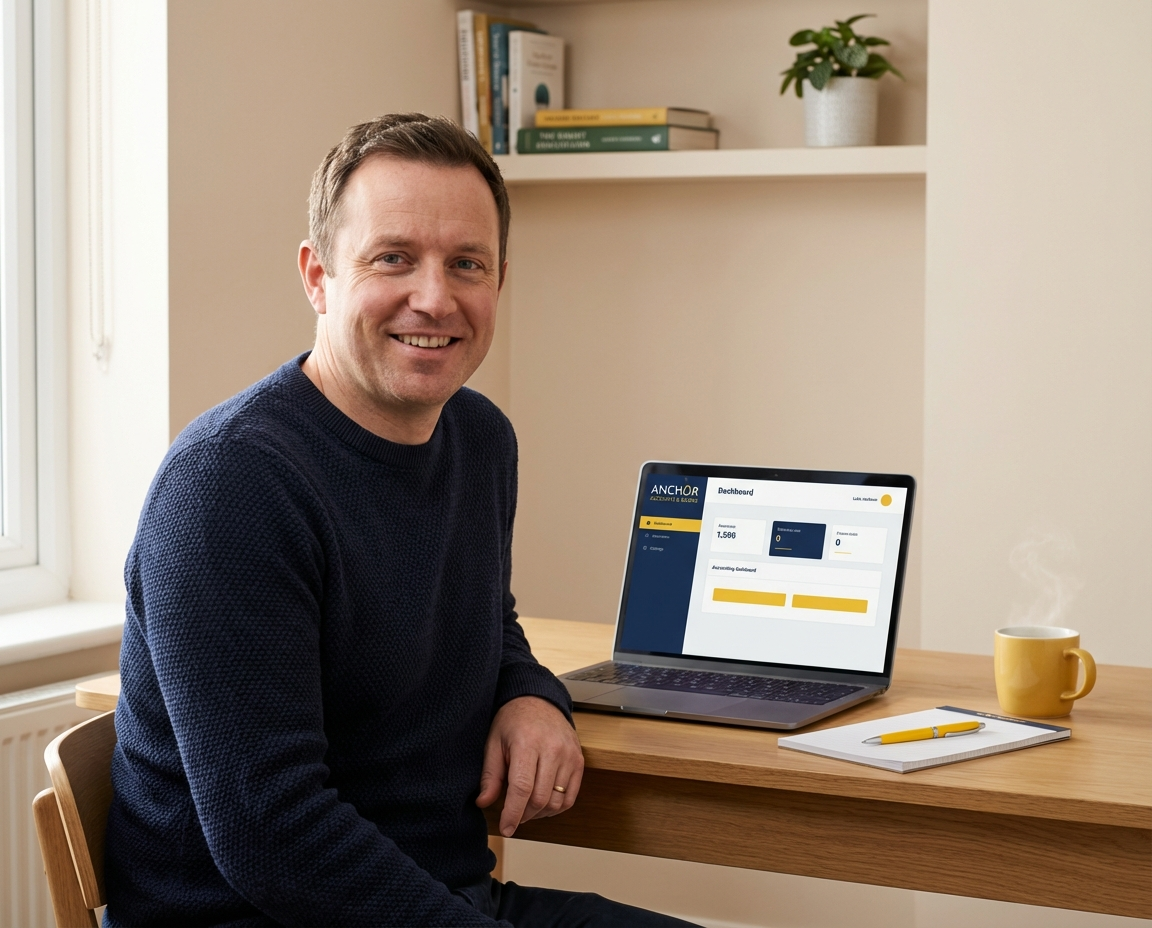
What is small business accounting, really? Strip away the jargon and it comes down to three things: knowing what money came in, knowing what money went out, and making sure HMRC gets the right numbers at the right time.
What small business accounting actually involves
Accounting is not just about tax returns. It is the process of recording every transaction your business makes, organising those records into a format that makes sense, and then using that information to report your profits to HMRC. Done properly, it also shows you whether your business is actually making money — which sounds obvious, but a lot of owners are genuinely unsure.
The core tasks include bookkeeping (recording transactions), preparing accounts (summarising your year), filing tax returns, and managing VAT if you are registered. If you employ anyone, payroll sits in there too. HMRC guidance on calculating taxable profits confirms that you need to keep records of all sales, takings, purchases and expenses — not just what you think is relevant, but everything.
HMRC can ask to inspect your business records going back up to six years. Keeping things organised from the start saves a lot of stress later — and means nothing gets missed when your tax return is due.
Cash basis or accruals — which applies to your business?
There are two main ways of recording your business income and expenses, and it matters which one you use. Cash basis accounting means you record money when it actually lands in your account or leaves it. Accruals (sometimes called traditional accounting) means you record income when you invoice and expenses when you are billed, even if the money has not moved yet.
For most sole traders and small businesses, cash basis is simpler and perfectly fine. You record what you actually received and actually paid — no need to track invoices that have not been settled. Accruals is more common for limited companies or businesses with stock, where the timing of money in and out can distort the picture significantly.
What records do you actually need to keep?
This is where a lot of small business owners get caught out. Good records are not just a nice habit — they are a legal requirement. You need to keep records of all income and sales, all business expenses, VAT records if you are VAT-registered, payroll records if you have staff, and bank statements to reconcile against. HMRC requires this whether you file your own return or use an accountant.
HMRC research into small business tax compliance found that in 2022 to 2023, small businesses accounted for 60% of the total tax gap, estimated at £23.9 billion. A significant driver is blurred personal and business finances — using the same bank account for everything, forgetting to record cash sales, or missing legitimate expense claims. Keeping business and personal money separate from day one makes every part of accounting simpler.
Do you need an accountant, or can you manage it yourself?
There is no legal requirement to use an accountant if you are a sole trader. You can prepare and file your own Self Assessment return and keep your own records. Whether that is a good idea depends on how confident you are with numbers, how complex your income is, and how much your time is worth. A missed expense claim or a late filing penalty can easily cost more than the fee you were trying to avoid.
Cloud accounting software like QuickBooks, FreeAgent or Xero makes the record-keeping side much more manageable. But software does not check whether your tax position is optimised, spot an expense you are allowed to claim, or pick up the phone when HMRC sends a letter you do not understand. For many small business owners, the value of a good accountant is not just the filing — it is having someone in your corner who knows what they are looking at.
If you have read this and are thinking ‘I think I’ve been doing this wrong’, do not panic. Most people starting out get things slightly off, and almost all of it is fixable. If you want to talk it through, just book a free call and I’ll tell you honestly where you stand.
Want to go further?
Whether you want to understand more before making any decisions or you are ready to get your accounts sorted, here are two useful next steps.
Not sure whether your accounting is in good shape?
Answer five quick questions and find out exactly what you should be focusing on.

AAT qualified accountant based in Uttoxeter. Personal, one-to-one accounting for small businesses and sole traders across the UK.