A Practical Guide to Online Accounting for Your Limited Company
“Would 100% recommend, is always polite, professional and helpful! He is always available to answer any questions I have and his knowledge has been a saving grace many times!”
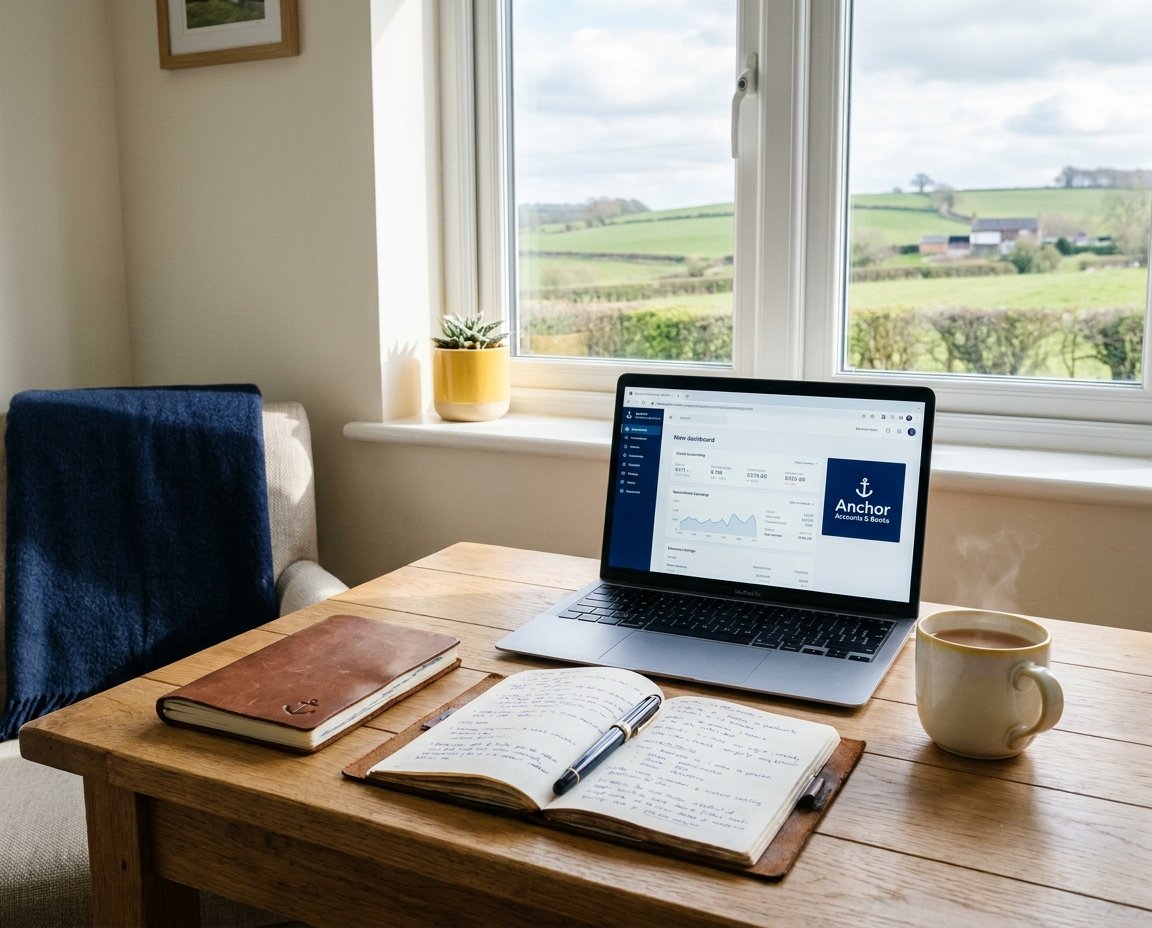
Running a limited company comes with specific filing obligations that a spreadsheet or a generic app will not fully cover. This guide explains exactly what online accounting involves for a limited company director, what the rules require, and how to avoid the errors that lead to penalties.
Why online accounting matters more for limited companies than for any other structure
A limited company has more filing obligations than a sole trader. You have statutory accounts for Companies House, a Corporation Tax return (CT600) for HMRC, and if your turnover exceeds the VAT threshold, full Making Tax Digital for VAT compliance on top. Each of those deadlines is independent, and missing any one of them carries a financial penalty.
Online accounting software is not a luxury for a limited company director. According to a government report on SME technology adoption, accounting software is now the most sought-after technology among UK small businesses. The reason is straightforward: paper records and basic spreadsheets cannot produce the compliant, formatted output that HMRC and Companies House require.
The joint online filing service for company accounts and Company Tax Returns closed on 31 March 2026. From 1 April 2026, you must use third-party software to file your Company Tax Return with HMRC. Filing via the old HMRC portal is no longer an option. Source: GOV.UK.
Where most limited company directors go wrong with online accounting
The most common mistake is treating online accounting software as a complete solution. Software categorises transactions and produces reports, but it does not know your company’s specific tax position, check your figures for accuracy, or file anything on your behalf. A director who uses software without an accountant is still responsible for every number that goes to HMRC.
Choosing software built for sole traders, not limited companies
Not all accounting software handles limited company requirements. You need a platform that can produce statutory accounts in the correct format, calculate corporation tax, manage a directors’ loan account, and handle payroll if you pay yourself a salary. QuickBooks, FreeAgent, Xero, and Sage all support limited company structures, but the setup has to be correct from the start or your reports will be unreliable.
Paying for a service and receiving nothing in return
A thread on UK Business Forums describes a director who paid monthly for an online accountant but received no contact and no accounts for 18 months. That situation is more common than it should be. If you are paying a firm and never hearing from the person responsible for your accounts, that is a problem regardless of how modern their software looks.
“Most directors come to me after trying to handle things themselves. The records are usually in a worse state than they think, but that is fixable. What matters is sorting it before HMRC starts asking questions.”
What to do: a step-by-step guide for limited company directors
The process below applies whether you are newly incorporated, switching from a previous accountant, or picking this up after a period of disorganised records. The steps are practical and in the order they should happen.
- Choose software that fits a limited company: QuickBooks, FreeAgent, Xero, or Sage are all established options that handle statutory accounts, corporation tax, and payroll. If you are VAT-registered, the software must be Making Tax Digital for VAT compliant, which all four are. Set up your chart of accounts correctly at the start so your reports reflect your actual business.
- Connect your bank account to the software so transactions import automatically. Categorise each transaction consistently and reconcile monthly. Falling behind on reconciliation is the single most common reason year-end accounts take longer and cost more than they should.
- Know your key filing deadlines and work backwards from them. Your statutory accounts are due at Companies House nine months after your year-end. Your Corporation Tax return and payment are due nine months and one day after your year-end. Confirmation statements are due annually. Your accountant should be tracking all of these for you, not just waiting for you to ask.
If you are behind on any of these, the practical step is to gather what records you have and speak to an accountant before the deadline, not after it. HMRC does not accept ‘I did not know’ as a reason to waive a late filing penalty.
Costs and what to realistically expect
Software subscriptions for limited company accounting typically run from around 15 to 40 pounds per month depending on the platform and tier. That cost does not include an accountant. A qualified accountant handling your annual accounts, Corporation Tax return, and Companies House filing will charge separately. At Anchor Accounts and Books, I work on fixed monthly fees so there are no surprise invoices at year-end. What I charge covers the full picture: accounts, tax return, filing, and ongoing questions answered directly by me.
| Option | Pros | Cons |
|---|---|---|
| DIY with software only | Low upfront cost | High risk of filing errors, missed obligations, and penalties |
| Software plus a qualified accountant | Accurate filing, deadlines managed, tax position reviewed | Monthly or annual fee on top of software cost |
How to get started today
You do not need to have everything in order before speaking to an accountant. Most limited company directors who come to me are behind on their records, unsure what software to use, or both. That is a normal starting point. The free call is 20 minutes, there is no obligation, and I will tell you plainly what needs doing and in what order.
- Download and save at least three years of filing history from Companies House and HMRC before making any software changes. The old HMRC joint filing portal has closed, so having copies of previous submissions in your own files is now your responsibility.
- Book a free 20-minute call at anchoraccountsandbooks.co.uk/contact to go through your current situation. I will confirm which software suits your company, what your next deadlines are, and what a fixed monthly fee would cover.
Ready to sort your limited company accounting?
I handle Companies House filings, Corporation Tax returns, VAT, payroll, and bookkeeping for limited company directors across the UK on a fixed monthly fee with no tie-in. Book a free 20-minute call and I will tell you exactly what is needed.
Is your limited company accounting actually compliant?
Answer five short questions about your current setup and get a clear next step based on where things stand.

AAT qualified accountant based in Uttoxeter. Personal, one-to-one accounting for small businesses and sole traders across the UK.