Do You Actually Need Online Accounting Software as a Sole Trader?
“Luke is an extremely professional and approachable guy. His knowledge in the field of accounting is second to none.”
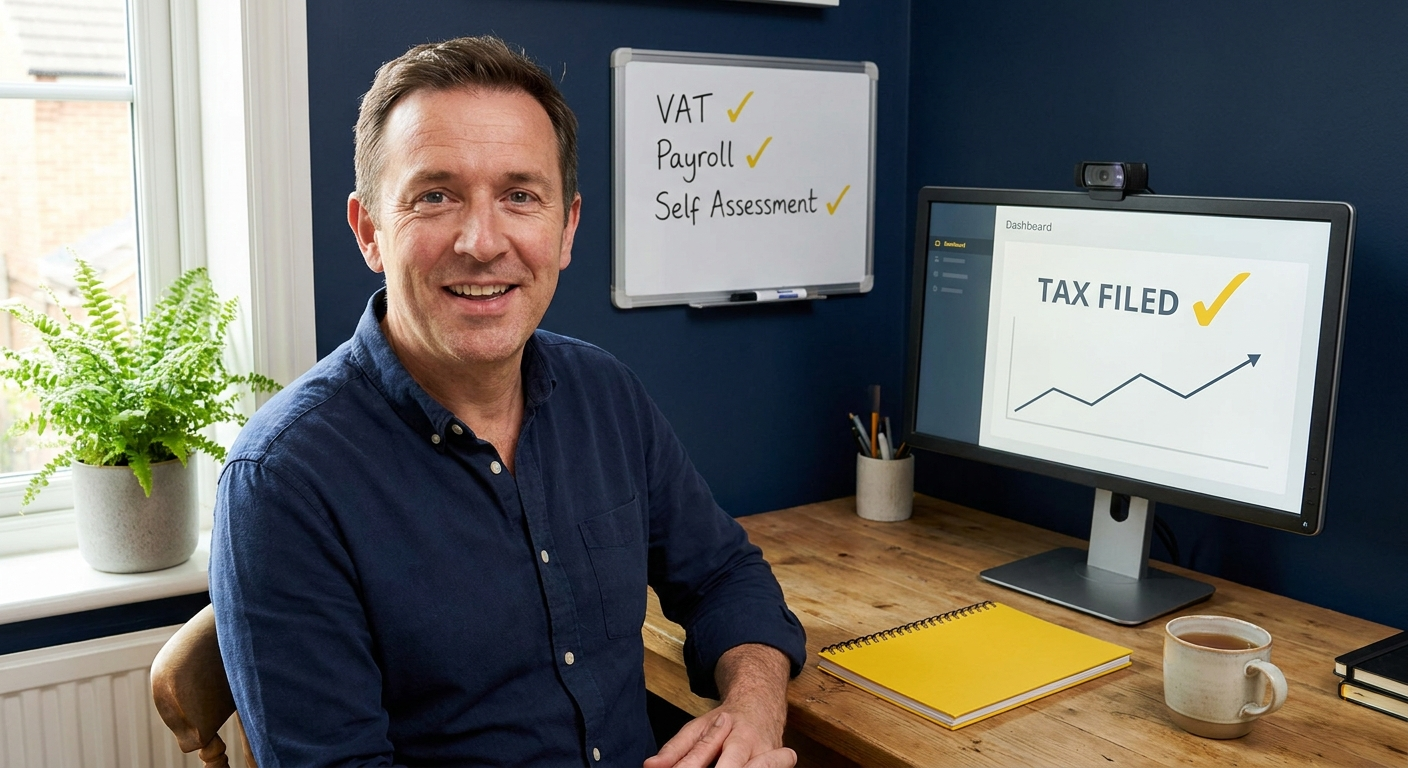
If you’ve been wondering whether sole traders actually need online accounting software, or whether a spreadsheet is still fine, the honest answer depends on where your business is right now. And for a lot of people, the answer has quietly shifted.
What Online Accounting Software Actually Does
At its core, online accounting software connects to your bank account, categorises your income and expenses, and keeps a running record of your finances. It replaces the spreadsheet, the shoebox and the frantic search through emails every January. Most platforms will also let you raise invoices, track what’s been paid, and give you a live picture of what you’ve earned.
The tax side is where it earns its keep for sole traders. A decent platform will pull together the numbers your accountant needs for your Self Assessment, flag expenses you might have missed, and help you avoid the three most common bookkeeping mistakes I see: mixing personal and business spending, missing allowable expenses, and keeping records that are too vague to rely on. Research from Bookkeeping Labs confirms these are the issues that trip up sole traders most often, and HMRC won’t write off errors as honest mistakes.
From 6 April 2026, HMRC requires some sole traders to use MTD-compatible software to report income quarterly. If your income is over £50,000, this applies to you now. Others follow in later years.
Making Tax Digital: Why the Rules Have Changed
Making Tax Digital for Income Tax (MTD for IT) is HMRC’s shift away from a single annual tax return towards quarterly digital reporting. If you’re a sole trader with income above £50,000, you’re required to use MTD-compatible software from April 2026. That means the software must create digital records, send quarterly updates to HMRC, and handle your final submission. A spreadsheet alone won’t cut it.
Despite that, only 25% of sole traders had signed up for MTD as of early 2026. That’s a lot of people who are either unaware or hoping it’ll sort itself out. It won’t. The earlier you get your records into a compliant system, the less painful the transition becomes.
The Real Reason Most Sole Traders Switch to Online Accounting
Most of the sole traders I work with didn’t switch because of MTD deadlines. They switched because something broke. An invoice went missing. A client disputed a payment. They opened their spreadsheet in January and genuinely didn’t know what they’d made in the previous year. That’s the moment the spreadsheet stops being good enough.
Online accounting gives you clarity you can actually trust. Your bank feeds in automatically. Income and expenses are categorised as you go. You can see your profit at any point in the year, not just when you’ve sat down for three evenings catching everything up. That shift, from reactive to current, is what makes the biggest practical difference for most people I speak to.
How to Choose the Right Software for Your Business
The honest answer is that the right software is the one you’ll actually use. The main options for sole traders in 2026 include QuickBooks, FreeAgent, Xero, Sage and FreshBooks, and they all handle the basics well. Where they differ is in how they present information, how well they connect to your bank, and how much hand-holding they offer when something doesn’t make sense.
I’m a QuickBooks ProAdvisor and a FreeAgent partner, and I work with Xero and Sage clients too. I don’t have a hard preference, because the right fit depends on how your business runs. What I do know is that software set up properly by someone who understands how HMRC works is worth more than the most expensive platform running on guesswork. If you’re unsure where to start, that’s a good reason to have a quick conversation before you commit to anything.
If your records are a bit behind, or you’re not sure whether your current setup is MTD-ready, don’t worry. Starting now, with the right help, is always better than waiting for a deadline to force the issue. If you want to talk it through, just book a free call and we’ll figure out what makes sense for you.
Ready to sort your accounting properly?
There’s a full guide below on how to set up online accounting as a sole trader, plus the option to book a free call if you’d rather just talk it through with me directly.
Not sure if your current setup is MTD-ready?
Answer five quick questions and find out exactly what you need to sort before the next deadline.

AAT qualified accountant based in Uttoxeter. Personal, one-to-one accounting for small businesses and sole traders across the UK.