What Is FreeAgent and Should You Use It for Your Business?
“Luke is an extremely professional and approachable guy. His knowledge in the field of accounting is second to none.”
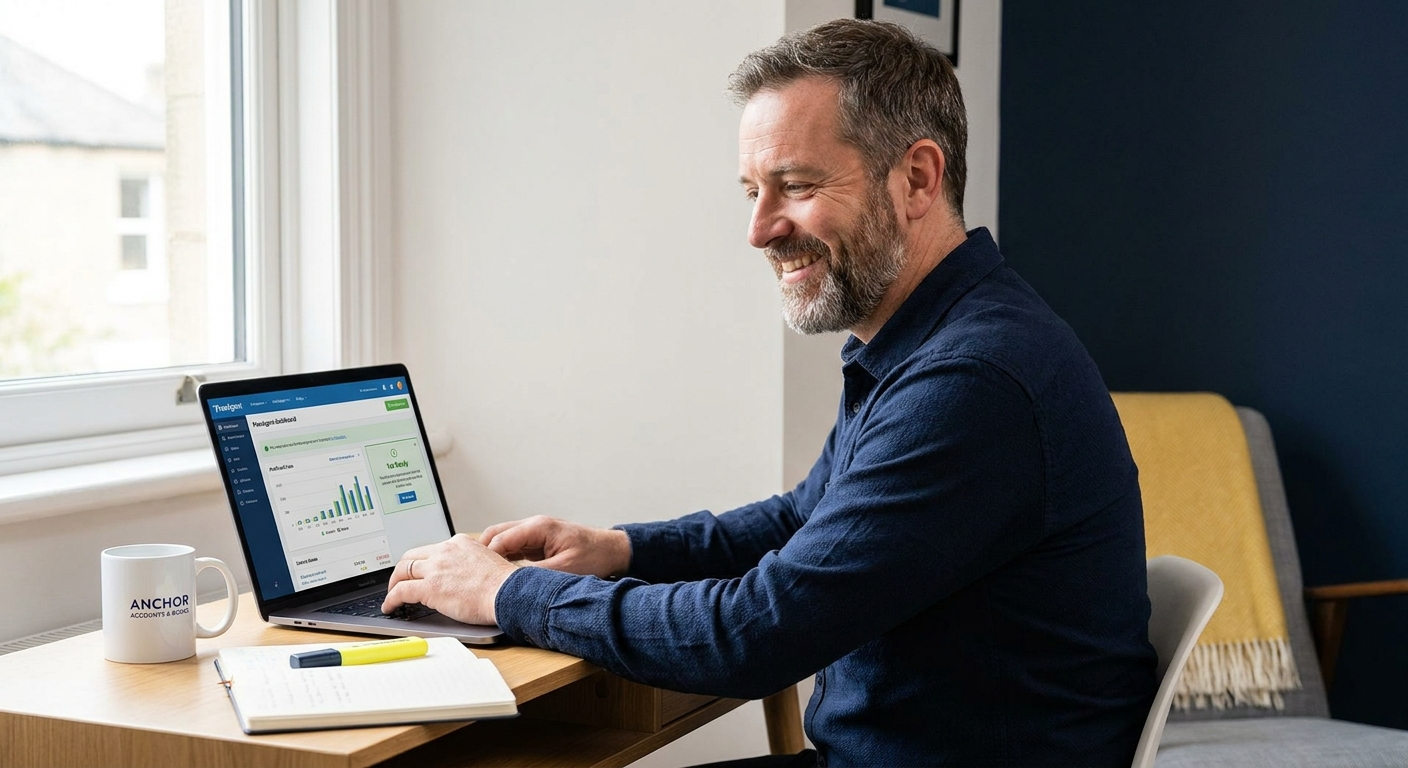
What is FreeAgent accounting software, exactly? If someone’s recommended it to you and you’re trying to figure out whether it makes sense for your business, you’re in the right place.
What FreeAgent actually is
FreeAgent is a cloud accounting platform built specifically for small UK businesses. It’s designed for freelancers, sole traders, contractors and small limited companies. You log in from any browser, and your accounts live online rather than on a spreadsheet or a desktop programme.
It was built in the UK, which matters more than it sounds. Everything inside it, from VAT to Self Assessment to Making Tax Digital, is set up around HMRC’s rules and the UK tax calendar. You won’t find references to systems that don’t apply here. HMRC lists FreeAgent as compatible software for Making Tax Digital for Income Tax, which becomes mandatory for many sole traders from 6 April 2026.
FreeAgent is free if you hold a business account with NatWest, Royal Bank of Scotland, Ulster Bank or Mettle. If you’re already banking with one of them, it’s worth checking before you pay for a subscription.
Who FreeAgent is actually designed for
FreeAgent is aimed squarely at people running small businesses who don’t have an in-house finance team. That means freelancers, consultants, contractors, tradespeople, creative professionals and sole traders who need to keep proper records without needing to understand double-entry bookkeeping to do it.
It also works for small limited companies. You can run payroll, track director dividends, produce year-end accounts and handle Corporation Tax deadlines all in one place. Contractors who’ve recently gone limited often find it fits well, especially now that FreeAgent supports CIS for contractors from April 2026 as part of the MTD rollout.
What FreeAgent actually does on a day-to-day basis
The core things FreeAgent handles are invoicing, expense tracking, bank feeds, VAT returns and Self Assessment. You connect your business bank account and transactions pull through automatically. You then categorise them, and FreeAgent builds your tax picture in real time so you’re not guessing what you owe at year-end.
The VAT return section lets you submit directly to HMRC through the software, which is a requirement under Making Tax Digital for VAT. From April 2026, MTD for Income Tax also requires compatible software to store digital records and send quarterly updates to HMRC. FreeAgent covers both. The receipt capture tool lets you photograph receipts and attach them to transactions, which keeps everything tidy if an HMRC enquiry ever lands.
What FreeAgent costs and what to watch out for
The sole trader plan is priced at £19 per month (or £190 per year) before VAT. There’s also a limited company plan at a higher price point. The standard plan includes up to 10 Smart Capture receipt files per month, with unlimited capture available as a £5 per month add-on. Those prices are reasonable for what you get, but do factor in that VAT is added on top.
One honest limitation worth knowing: some businesses do move from FreeAgent to Xero as they grow, often because they need more integrations with other tools. FreeAgent is excellent for small, straightforward setups. If your business has complex stock management, multiple currencies or lots of third-party software to connect, you might find it limiting later. That’s not a reason to avoid it at the start, but it’s worth being aware of if you’re planning significant growth.
If you’re still not sure whether FreeAgent suits your situation, I’m happy to talk it through. I work with clients on FreeAgent every day and can give you an honest view based on how your business actually runs. Drop me a message and we’ll have a straightforward conversation about it.
Want to go further with FreeAgent?
Here are two useful next steps, depending on where you are right now.
Not sure if FreeAgent is the right fit for your business?
Answer a few quick questions and find out which accounting setup suits your situation.

AAT qualified accountant based in Uttoxeter. Personal, one-to-one accounting for small businesses and sole traders across the UK.