What builders actually need to know about their accounts
“Luke is an extremely professional and approachable guy. His knowledge in the field of accounting is second to none.”
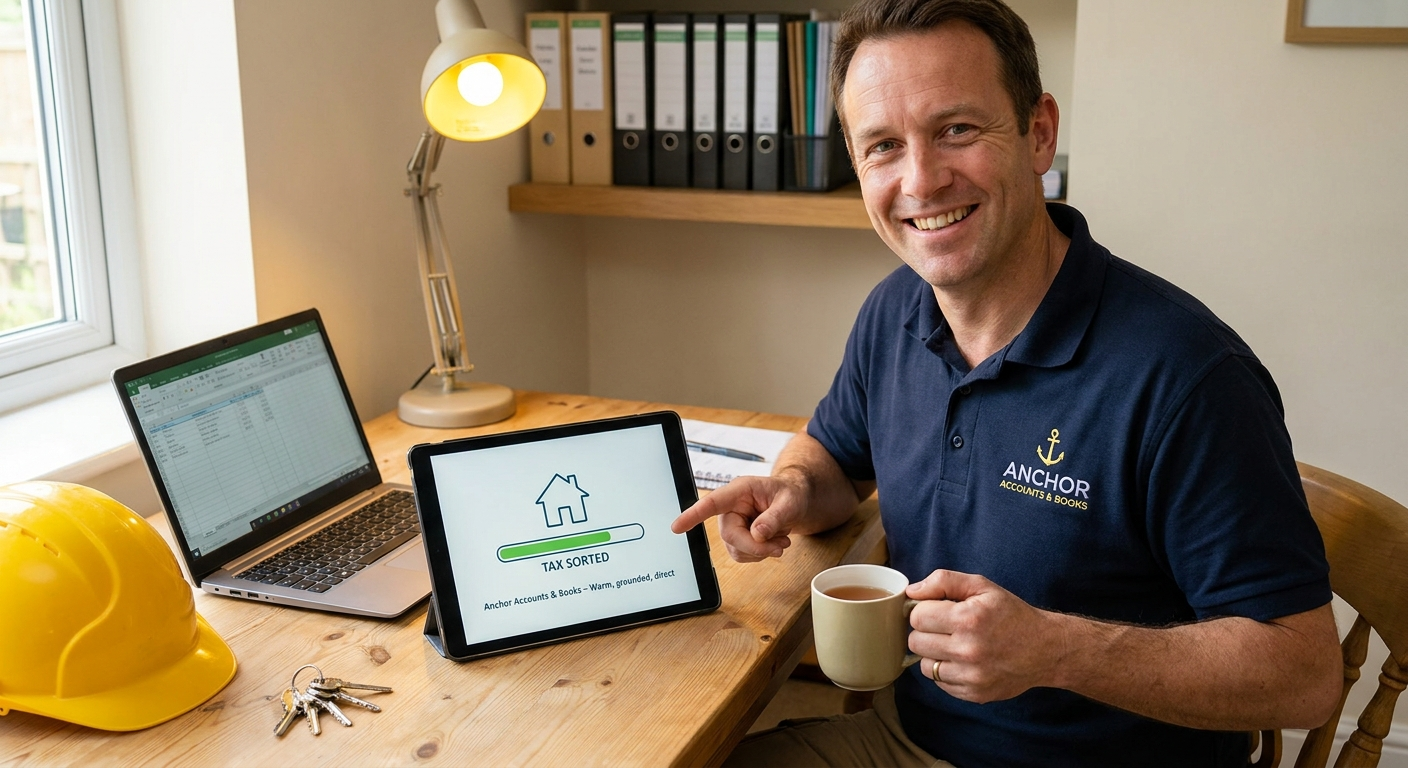
How accounting works for builders is genuinely different from how it works for most other businesses — and if you’ve ever felt like your accountant doesn’t quite get your world, there’s a very good reason for that.
CIS: the tax system most builders carry and few accountants truly know
The Construction Industry Scheme (CIS) is HMRC’s way of collecting tax from subcontractors working in construction. If you’re a contractor paying subbies, you’re required to verify them with HMRC and deduct either 20% or 30% from their labour payments before you pay them. You then pass that money to HMRC and file a monthly return.
If you’re a subcontractor yourself, you receive payments with CIS deductions already taken, and those deductions count as tax you’ve already paid when your Self Assessment or company tax return is filed. Getting this wrong in either direction creates real problems — overpaid tax that takes months to reclaim, or underpaid tax that HMRC will chase with interest and penalties.
From 6 April 2026, new PAYE rules apply to labour supply chains involving umbrella companies, including who bears responsibility if the PAYE isn’t operated correctly. If you use workers supplied through an umbrella, it’s worth checking how this affects you as the end client.
VAT reverse charge: the rule that trips up builders more than any other
Since 2021, most VAT-registered construction businesses have had to deal with the domestic reverse charge. In plain English: when a VAT-registered subcontractor invoices a VAT-registered contractor for construction services, the contractor accounts for the VAT rather than the subcontractor. The subbie raises the invoice with a zero amount for VAT and notes that the reverse charge applies.
The practical problem is that builders often handle dozens of subcontractor invoices a month, and a single incorrectly processed one creates a VAT mess. If you’re not VAT-registered yet but growing toward the £90,000 threshold, now is the time to understand this — because the first VAT return after registration catches a lot of people off guard.
Job costing: the part of builder accounting that most accountants ignore
Ask most small builders whether they made money on a job and they’ll say something like: ‘I think so — the client paid.’ That answer is a sign that job costing isn’t happening, and it’s usually where the real profit is disappearing. Job costing means tracking the actual labour, materials, plant hire and subcontractor costs against each individual contract, so you know the margin before the next one.
Cash flow is a separate problem. Builders often buy materials upfront, complete work in stages, and then wait on retention — sometimes for months or even years. Your profit and loss account can look fine while your bank account is almost empty, and that disconnect is where businesses get into trouble. A decent set of accounts should show you both pictures clearly.
What does good accounting actually look like for a building business?
It starts with bookkeeping that tracks income and costs by job, not just by category. Cloud accounting software like QuickBooks or FreeAgent can do this well when it’s set up correctly for a construction business — which means configuring job tracking from day one rather than retrofitting it later. Receipts, subbies’ invoices and CIS records all need to be captured and filed in a way that HMRC can inspect if they ask.
Beyond the record-keeping, it means having an accountant who can tell you whether your self assessment is overclaiming CIS deductions, whether you’d be better off trading as a limited company rather than a sole trader, and whether you’re planning properly for the tax bills that always seem to arrive at the worst possible time. That kind of forward-looking input is the difference between accounting that just files returns and accounting that actually helps you run the business.
If any of this sounds like the situation you’re in, I’m happy to talk it through. Drop me a message at Anchor Accounts and Books and we’ll have a plain conversation about where you are and what would actually help.
Want to go further with this?
There’s a full guide and a free call option below. Both are low-pressure — the guide covers the detail, and the call is just a conversation.
Not sure if your current accounting setup is working for your building business?
Answer five quick questions and find out where the gaps are most likely to be costing you.

AAT qualified accountant based in Uttoxeter. Personal, one-to-one accounting for small businesses and sole traders across the UK.